Vivisection in Bridal Couture
Engineered Silhouettes
Power Unquestionably Held
Resurrection
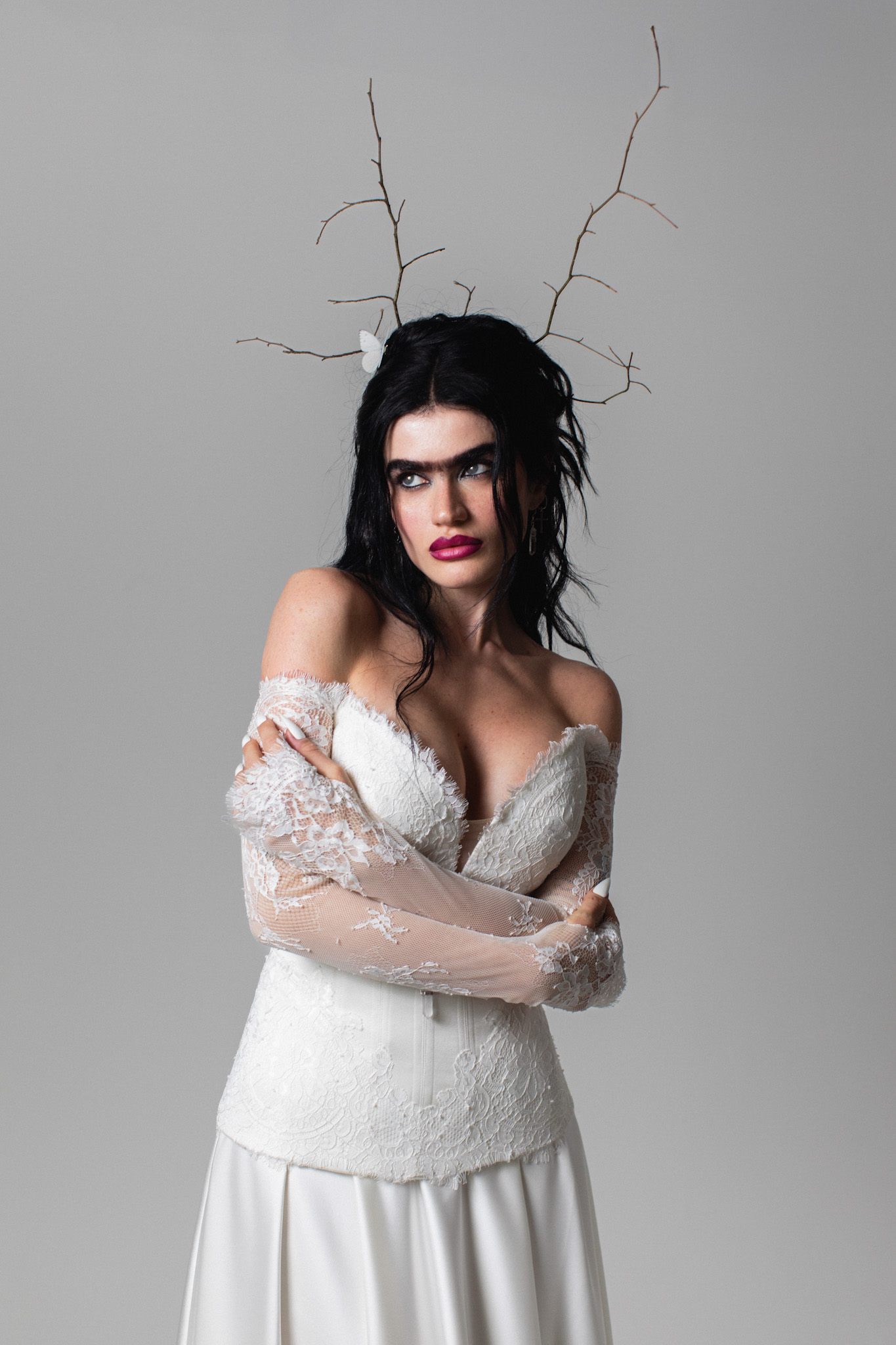
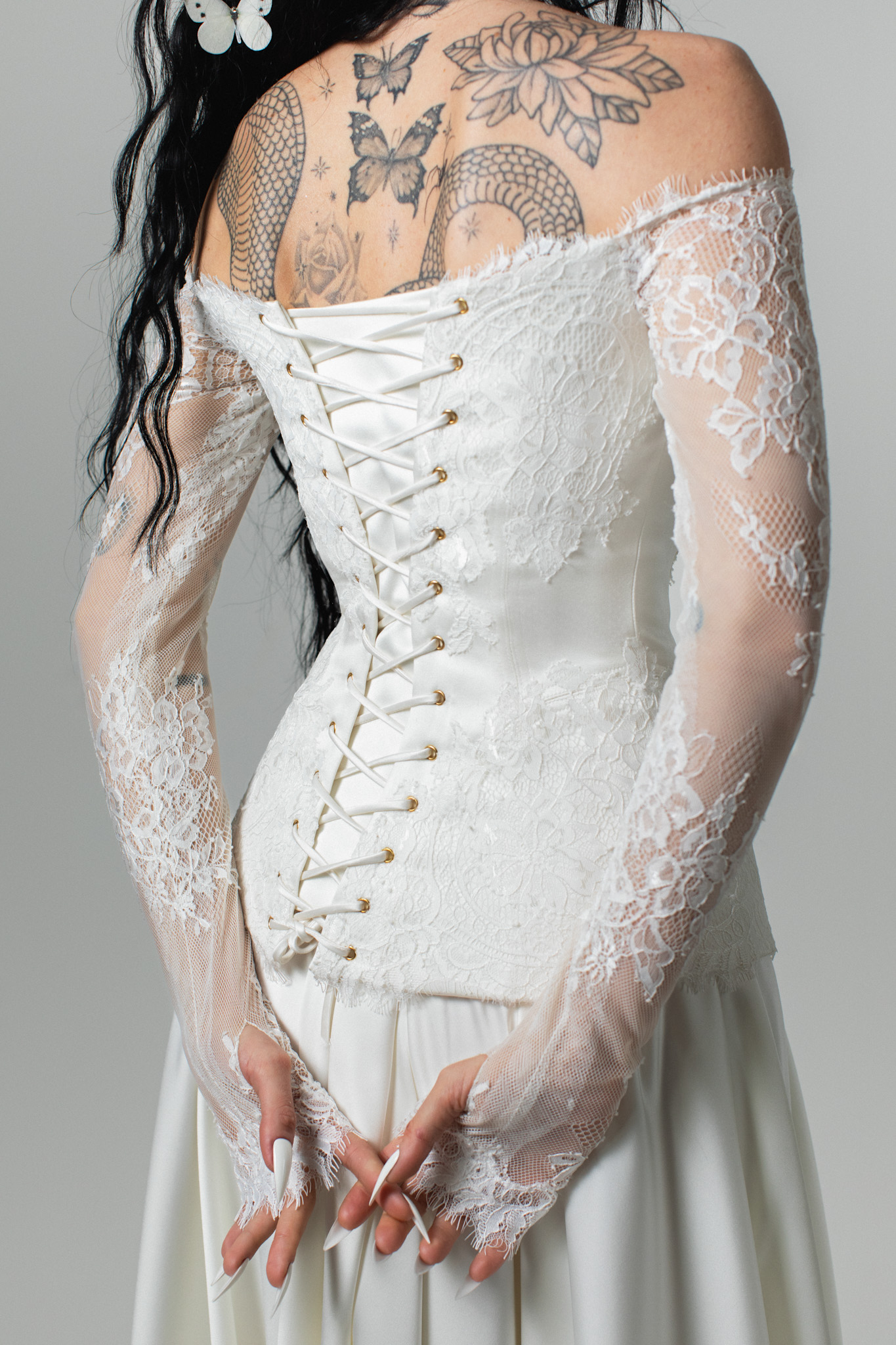
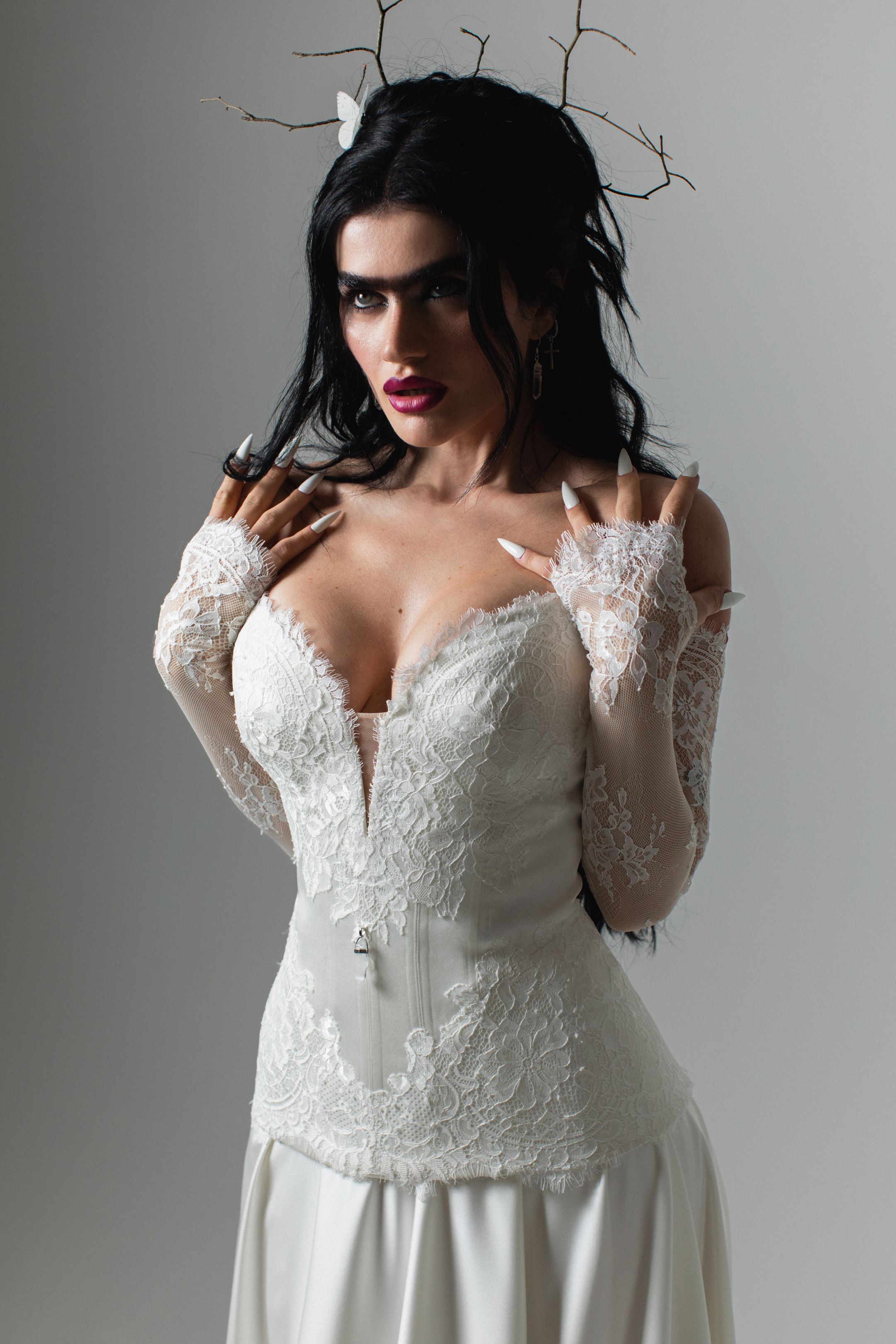
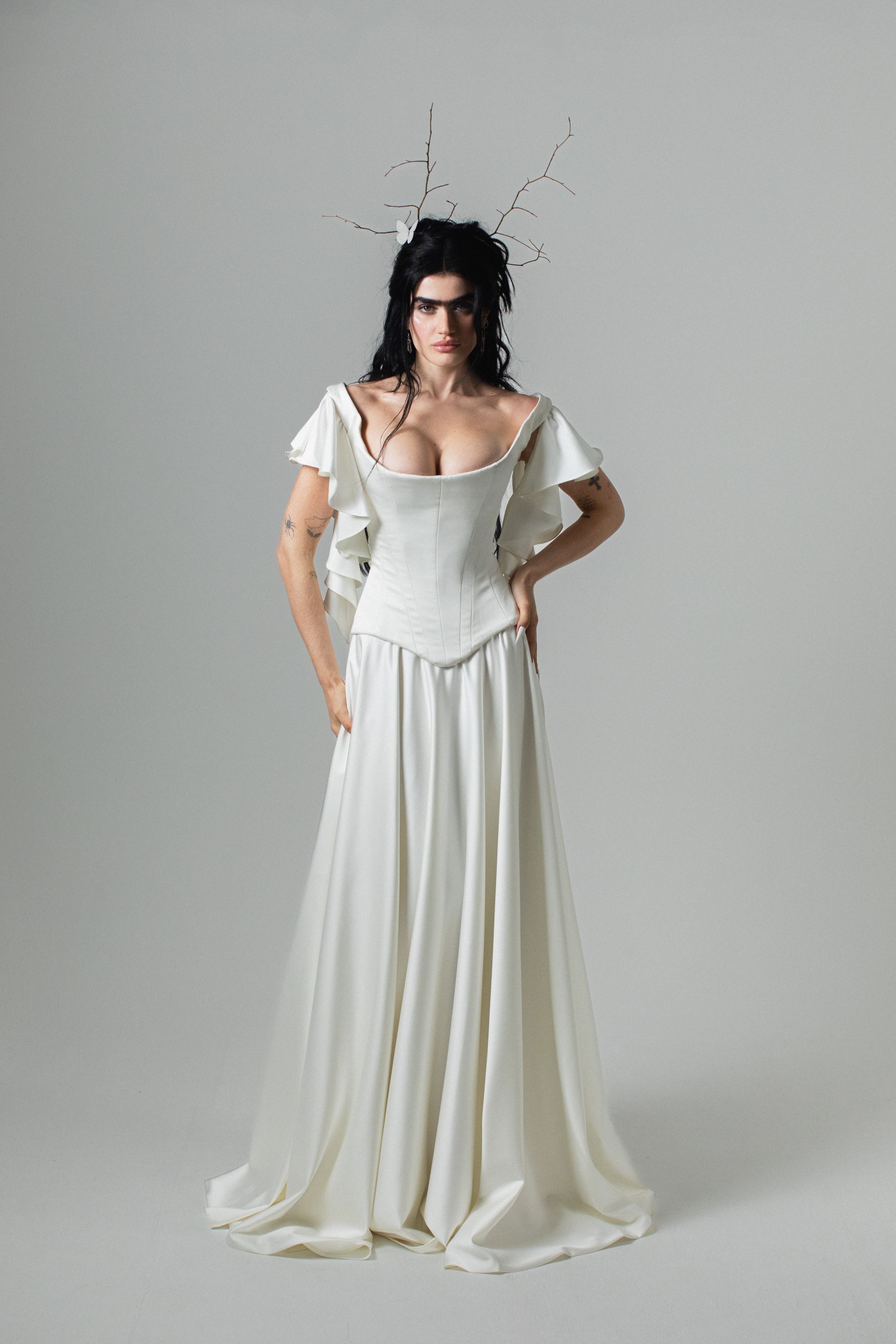
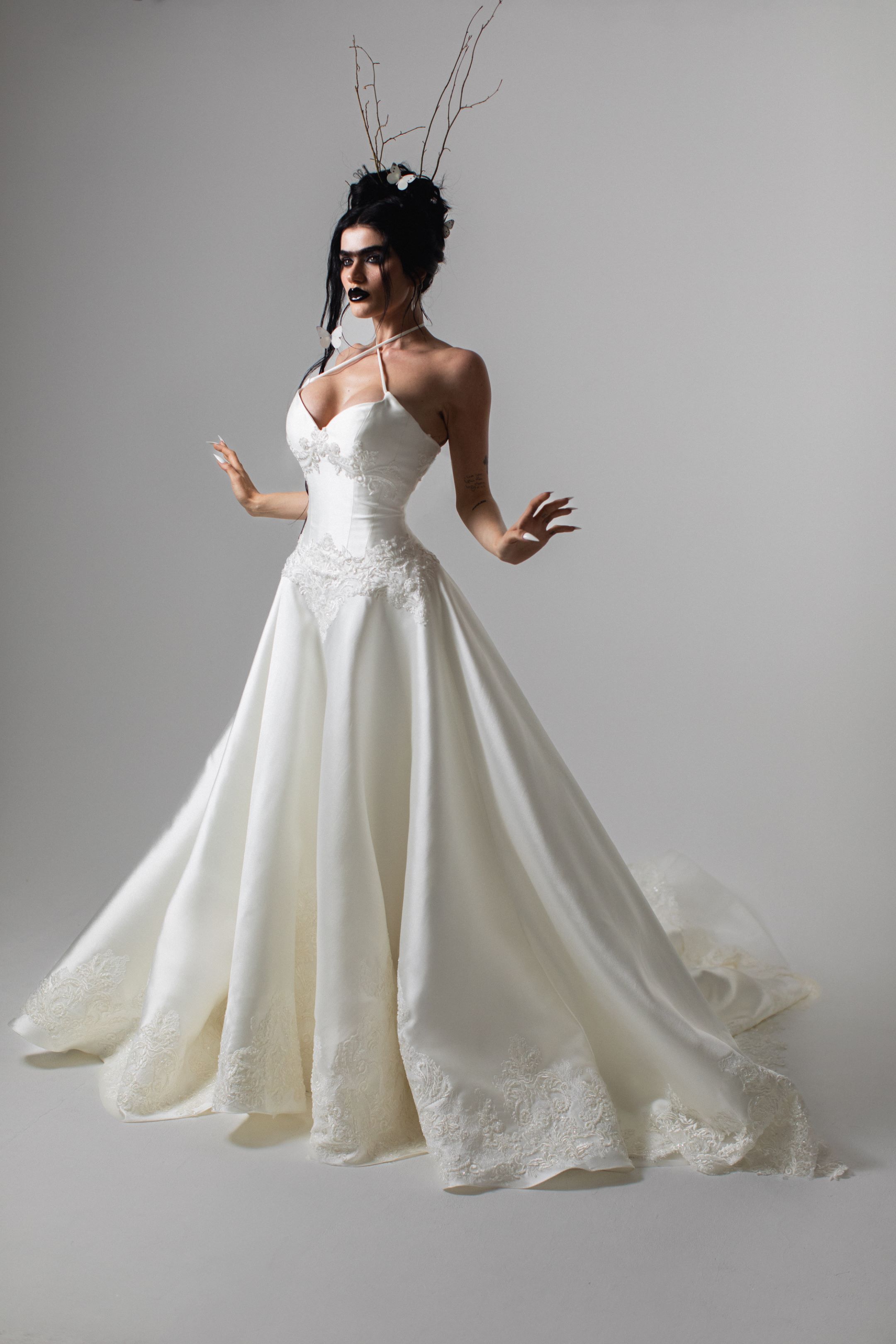
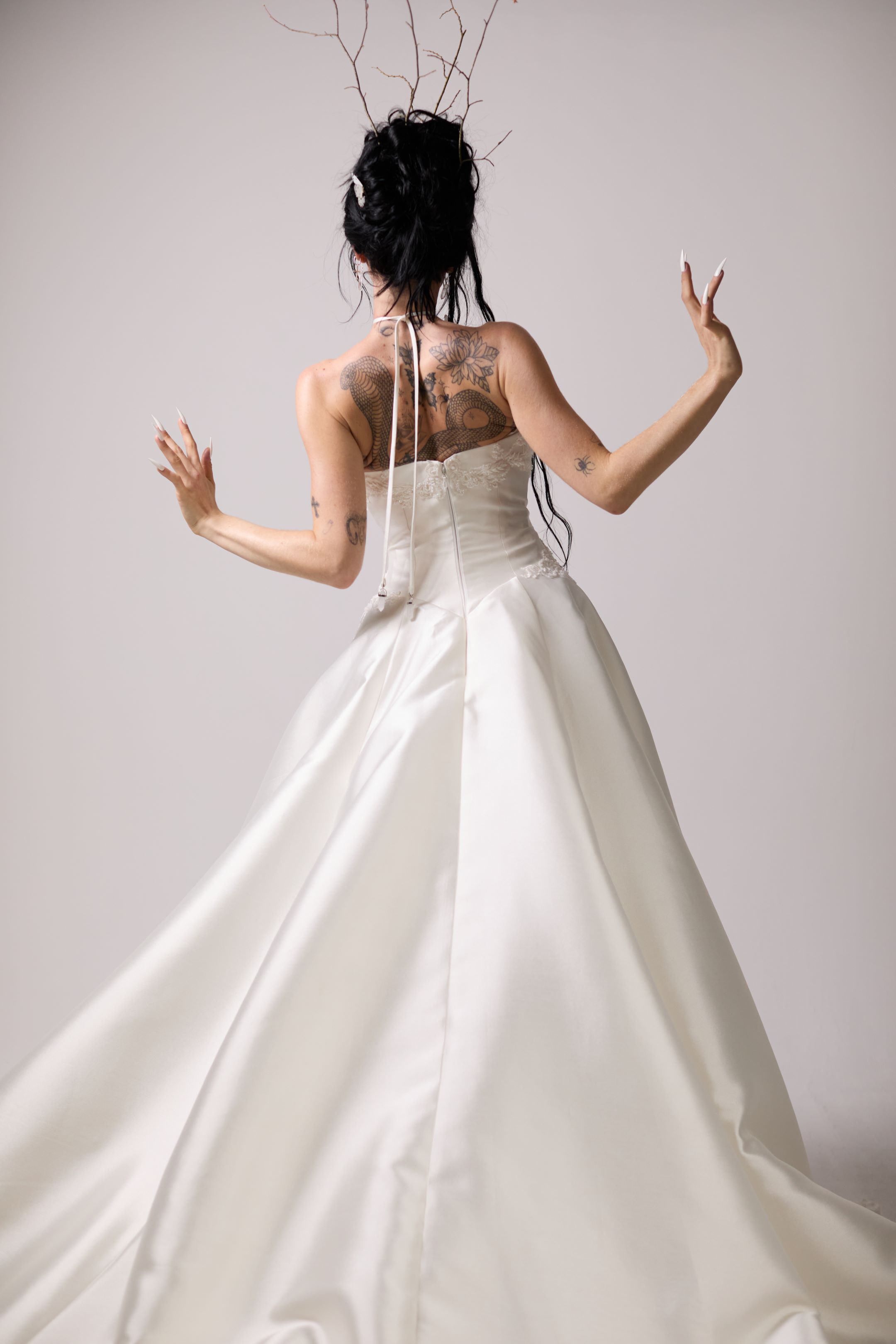
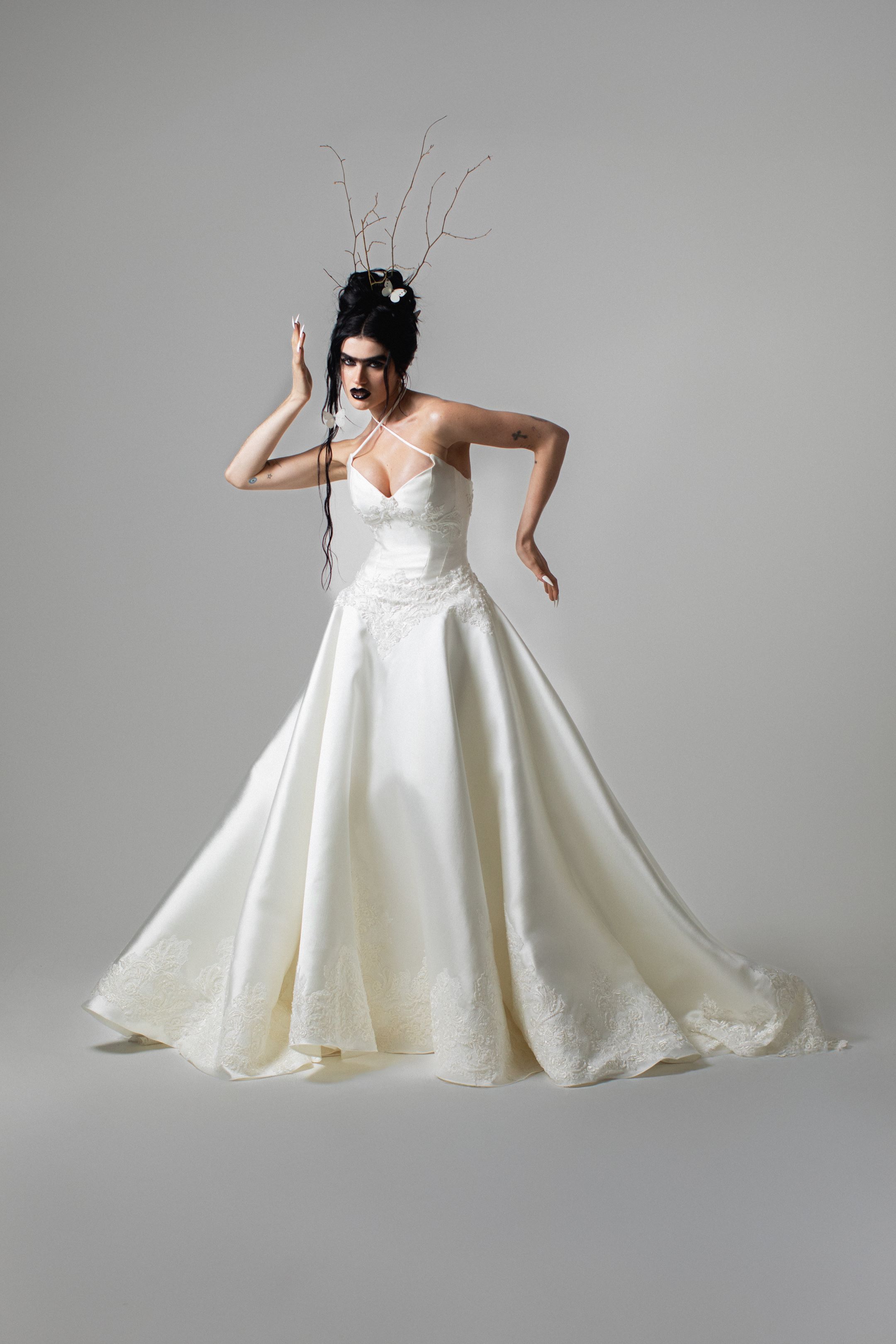
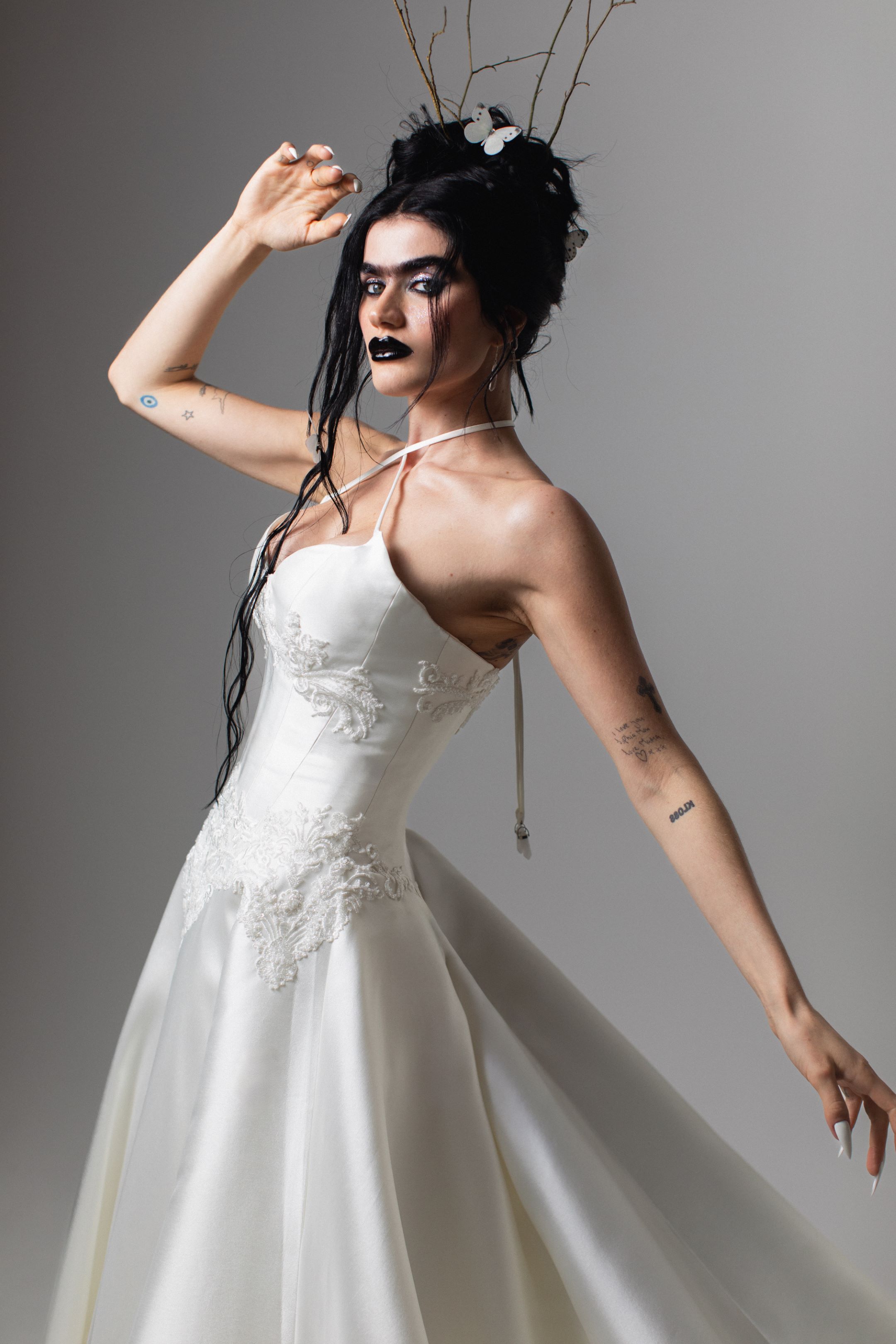
Resurrection rises from the ashes of a history written in blood and lies. Born of the witch-burning trials of the late 1400s and 1500s, this collection refuses the silence imposed on women whose power was twisted into crime. Each dress a Reckoning. Through fabric and form, Resurrection reclaims their narratives , not as shadows of myth, but as embodiments of survival. It transforms whispers of persecution into couture that endures. In every seam, crystal, and silhouette, they rise again - fierce, eternal, and unbound.
Helena
The first muse in our Resurrection collection.
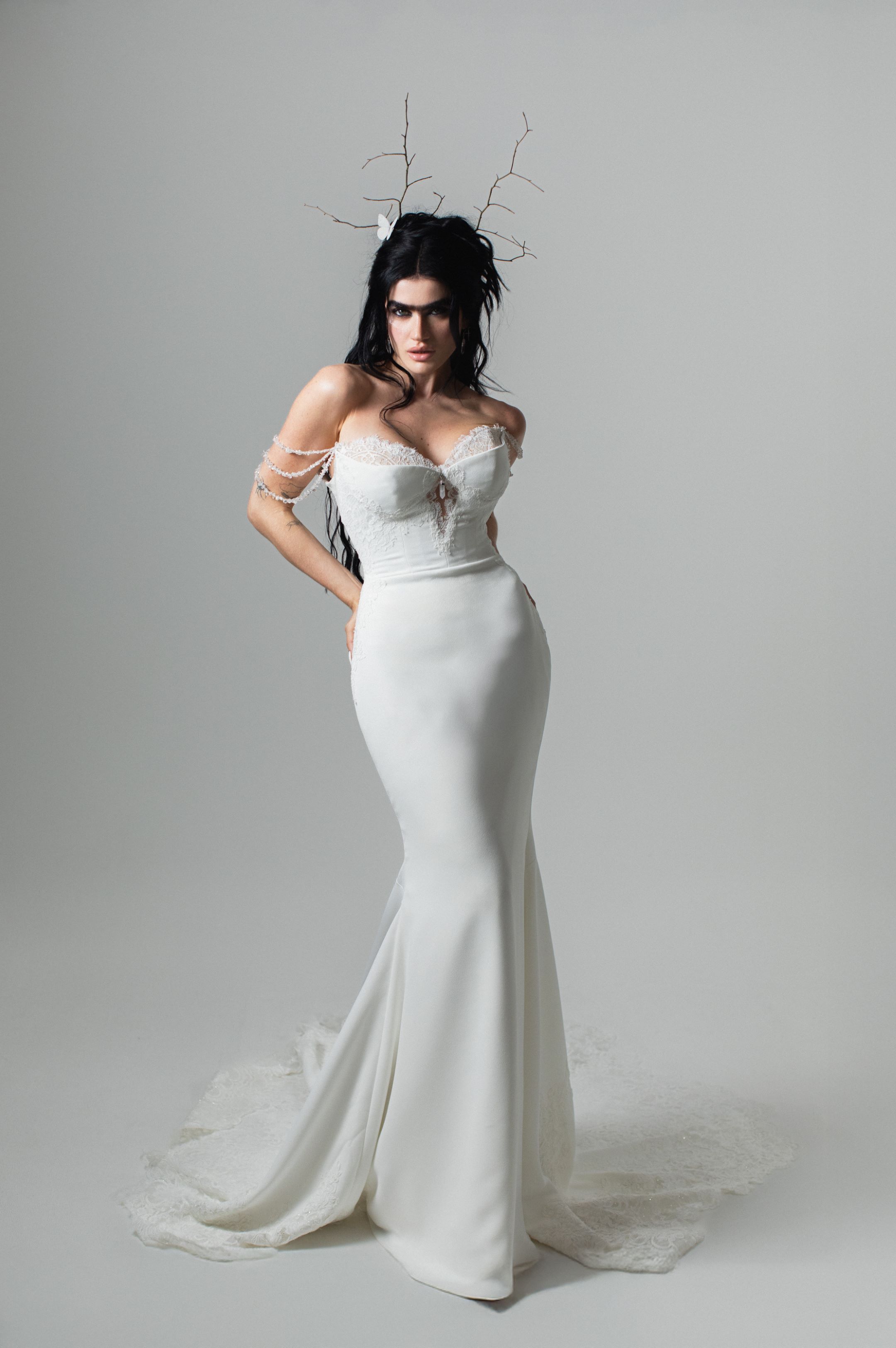
Helena Scheuberin was tried for witchcraft in 1485 by inquisitor Heinrich Kramer – a man she publicly defied, denounced, and humiliated in court. When he failed to convict her, he retaliated by writing the Malleus Maleficarum – The Hammer of Witches – The Catalyst that ignited centuries of burning of women across Europe.
This gown does not forget.
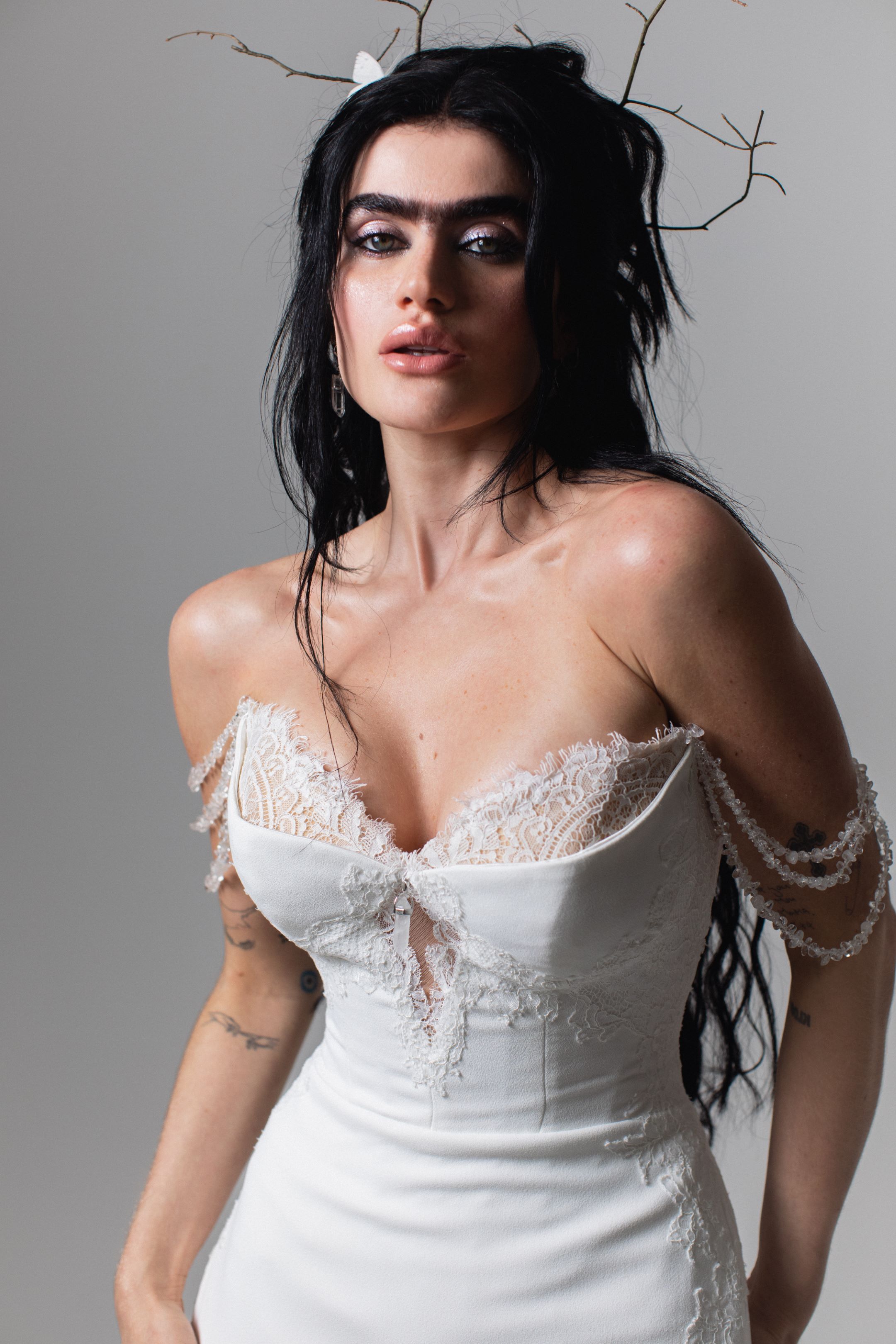
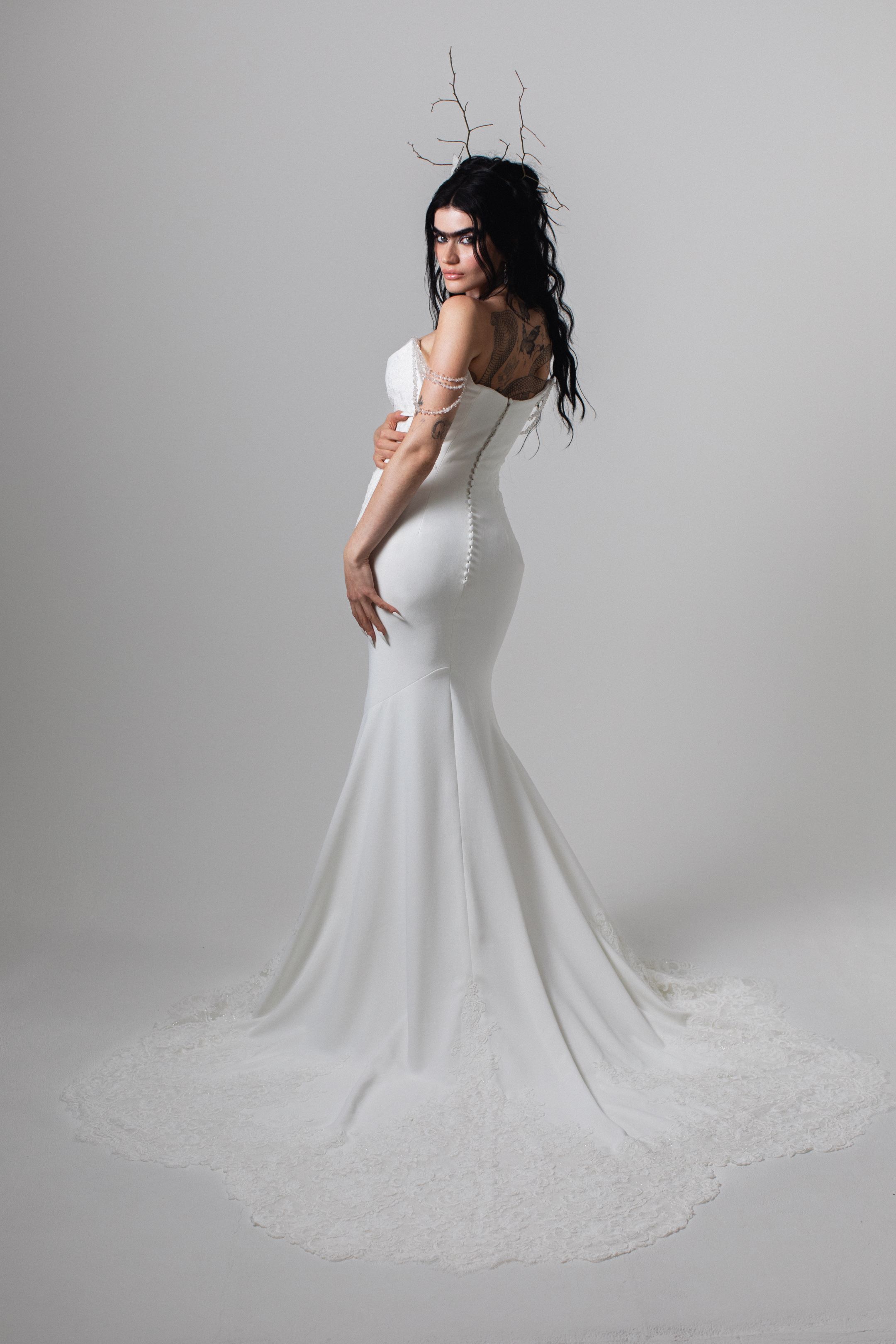
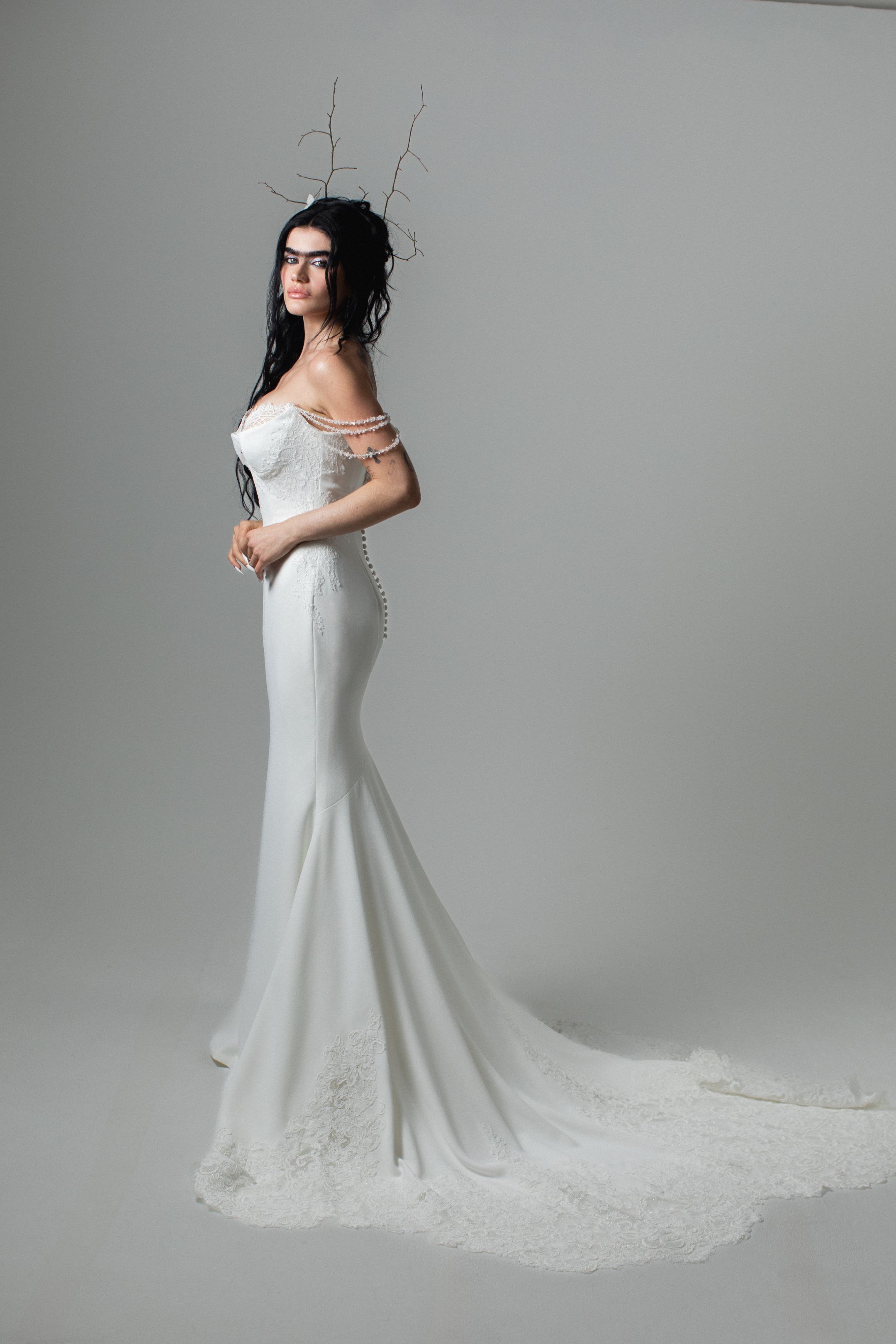
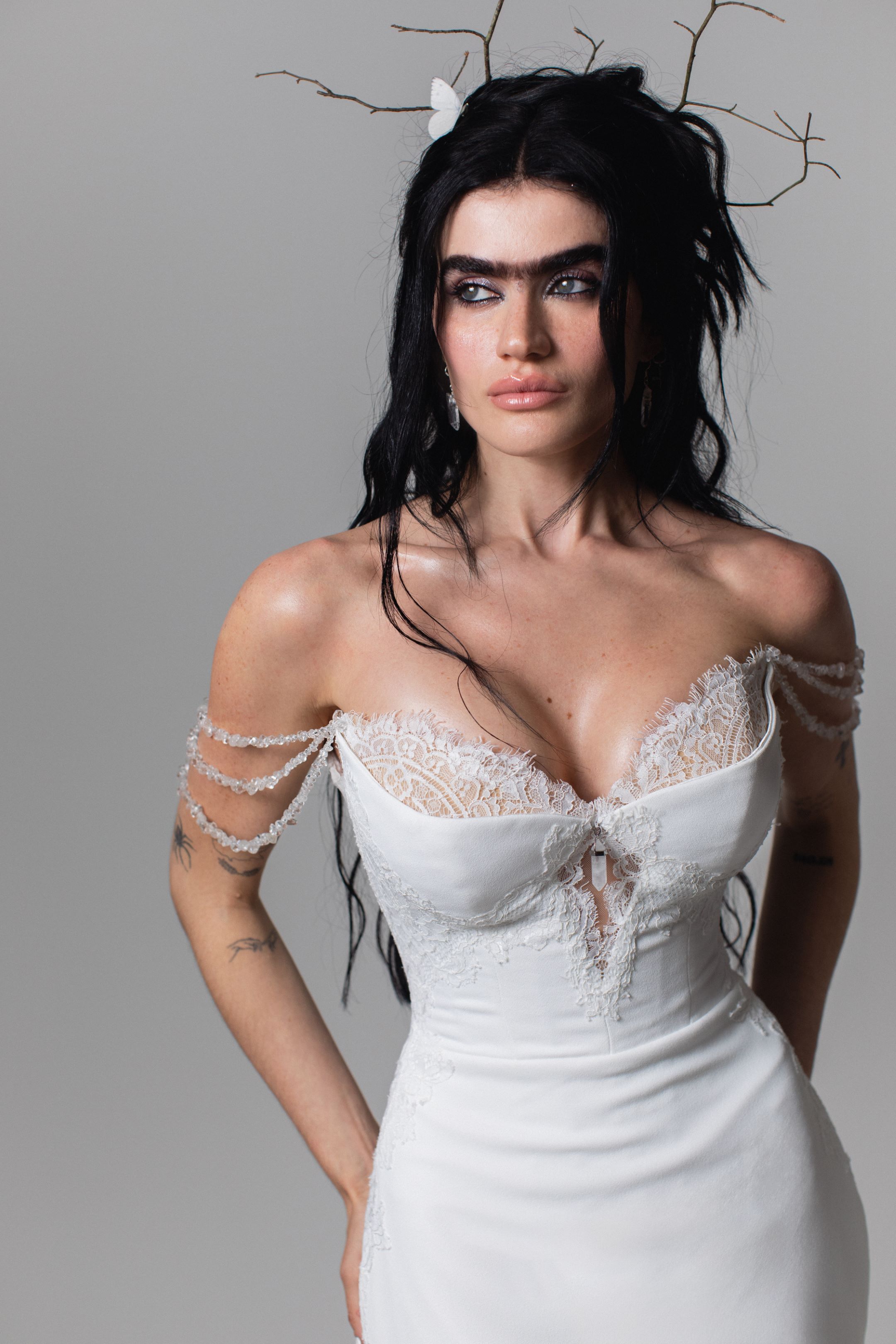
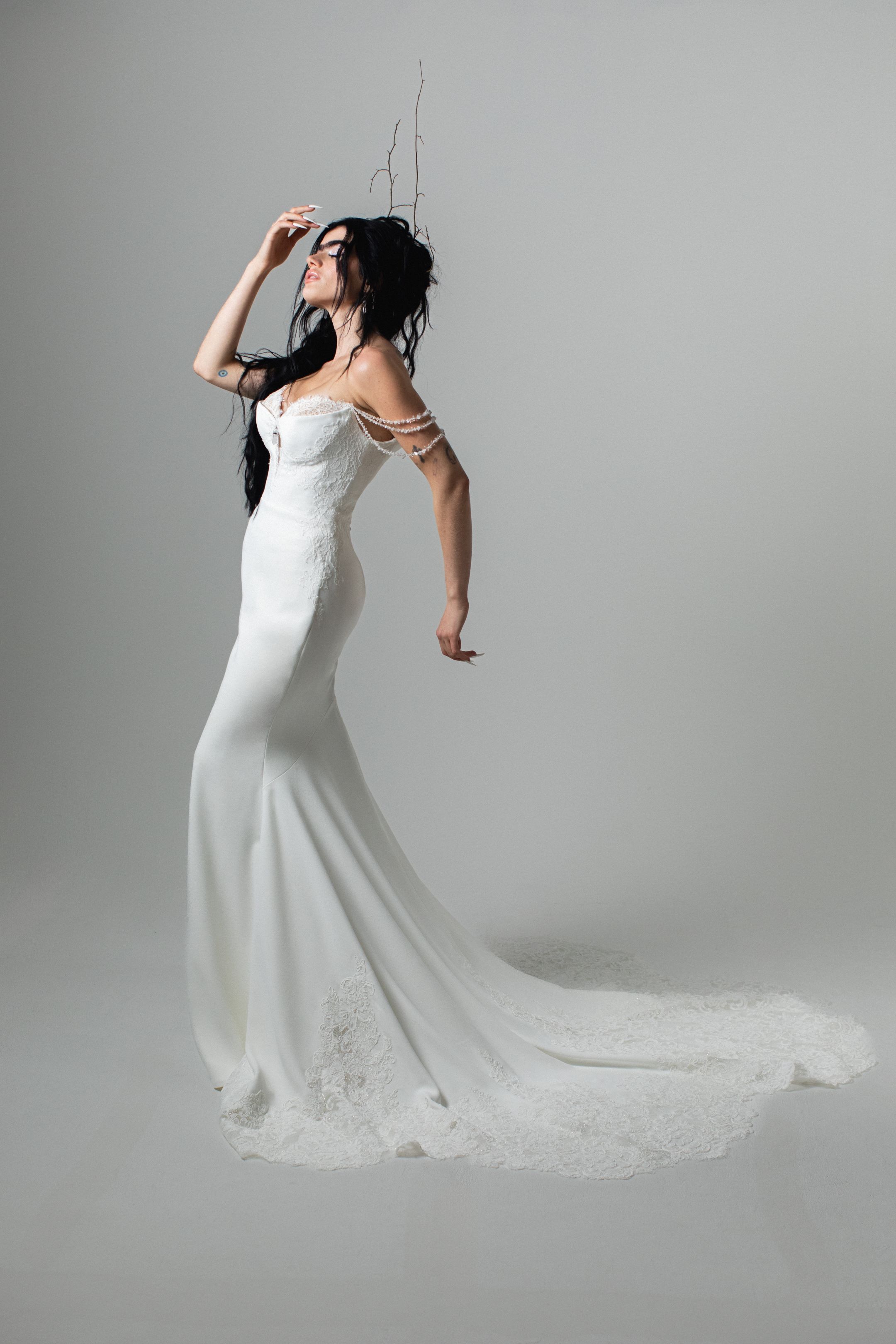
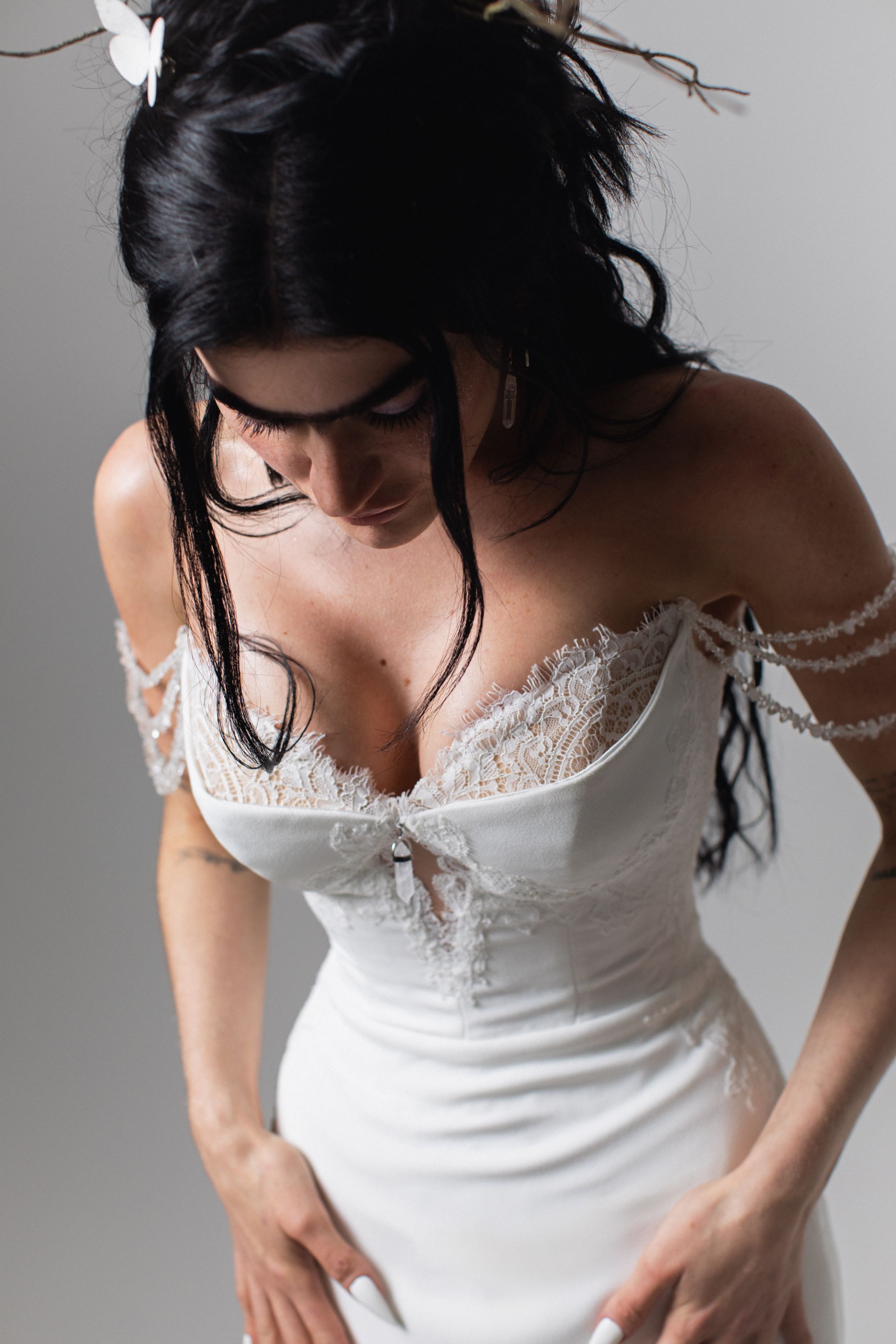
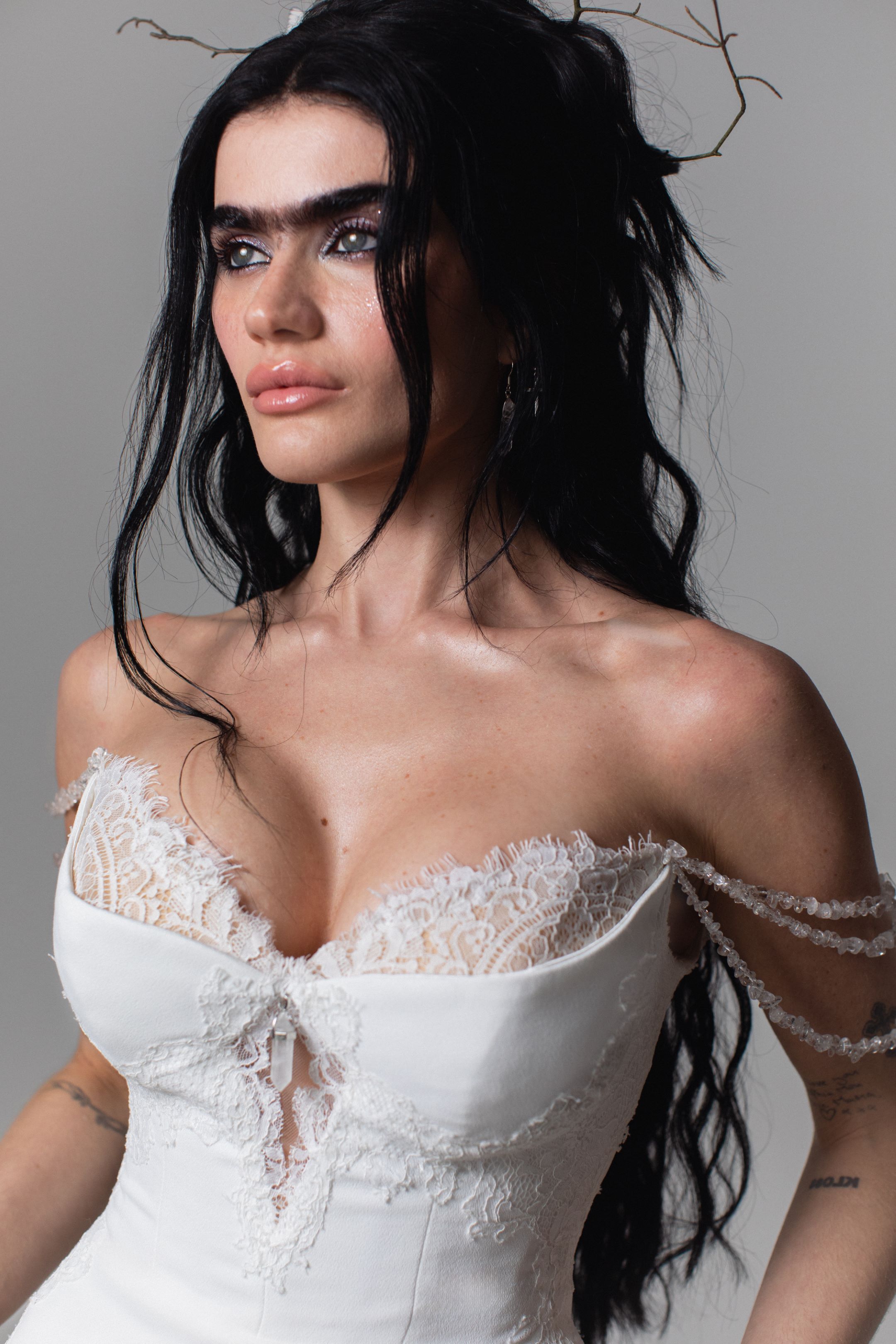
Helena is cut in bone-white crepe, its silhouette sharply fitted, flaring into a train etched with lace cut-outs. At its centre, a diamond-shaped cut-out opens over the chest – a window, a wound, a portal. Suspended within it, a single raw quartz crystal glows like a talisman.
Three strands of quartz fall in delicate off-shoulder drapes, catching light like spellwork – a whisper of those who came before.
Helena is not simply worn.
It is a vow remembered.
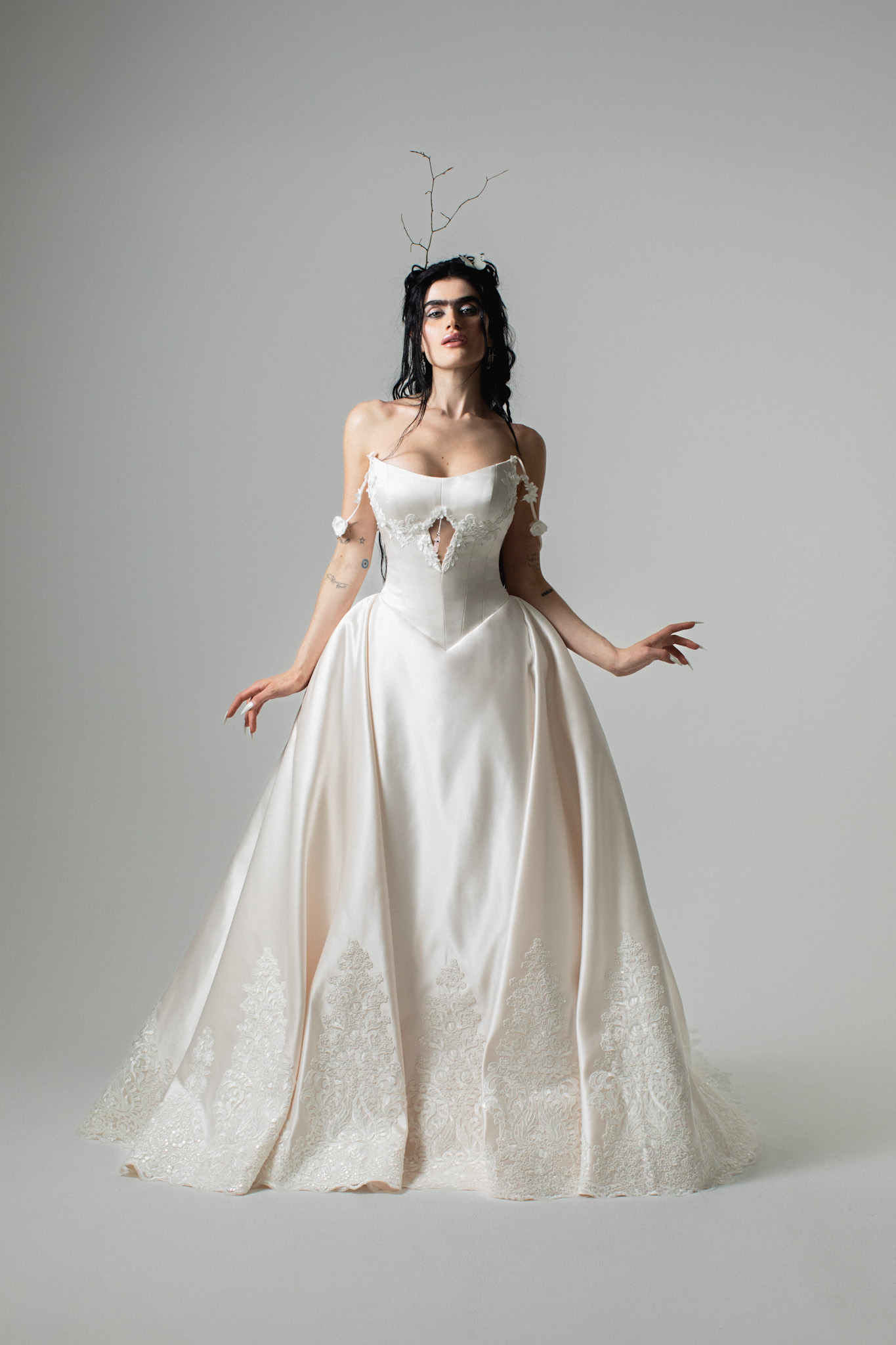
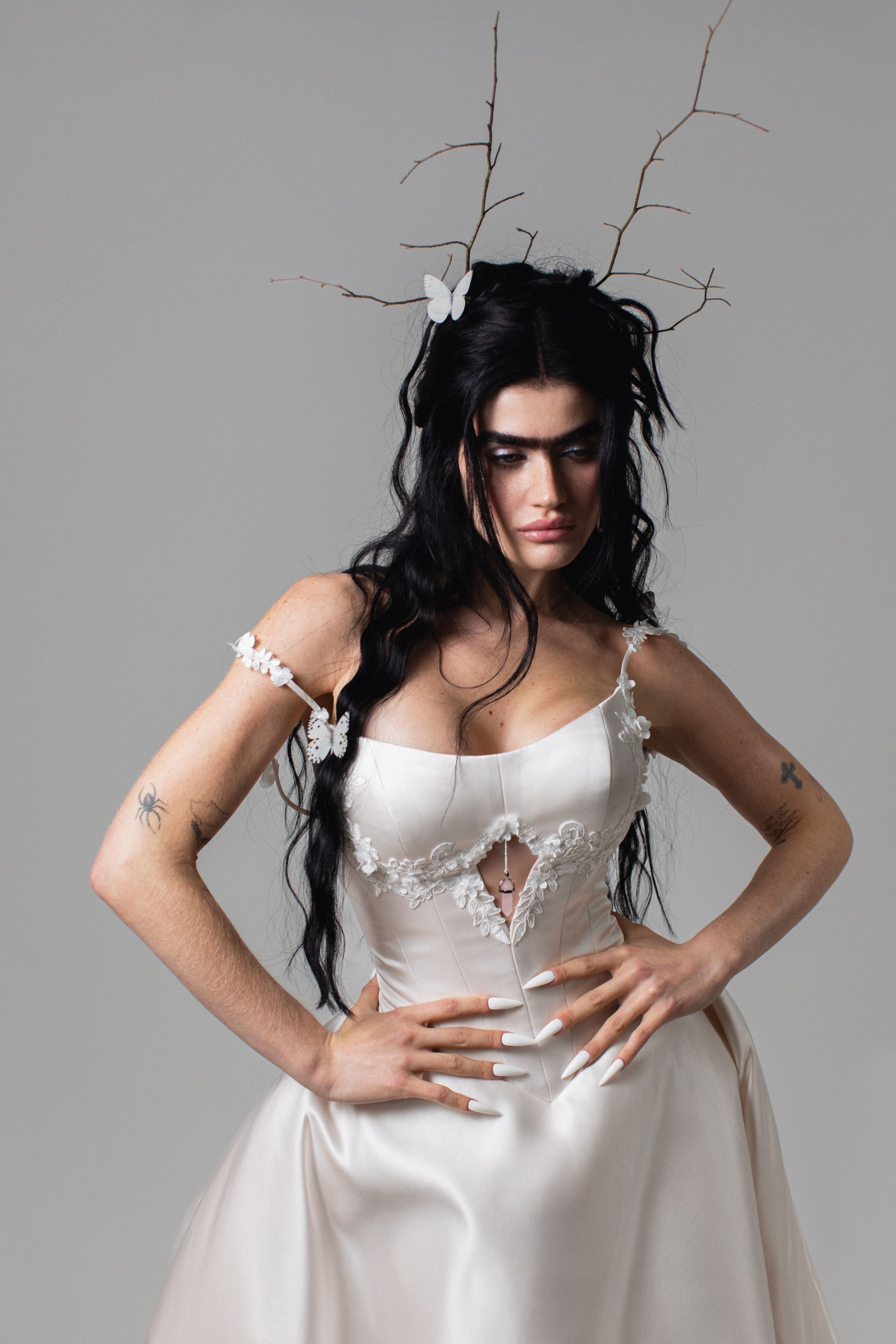
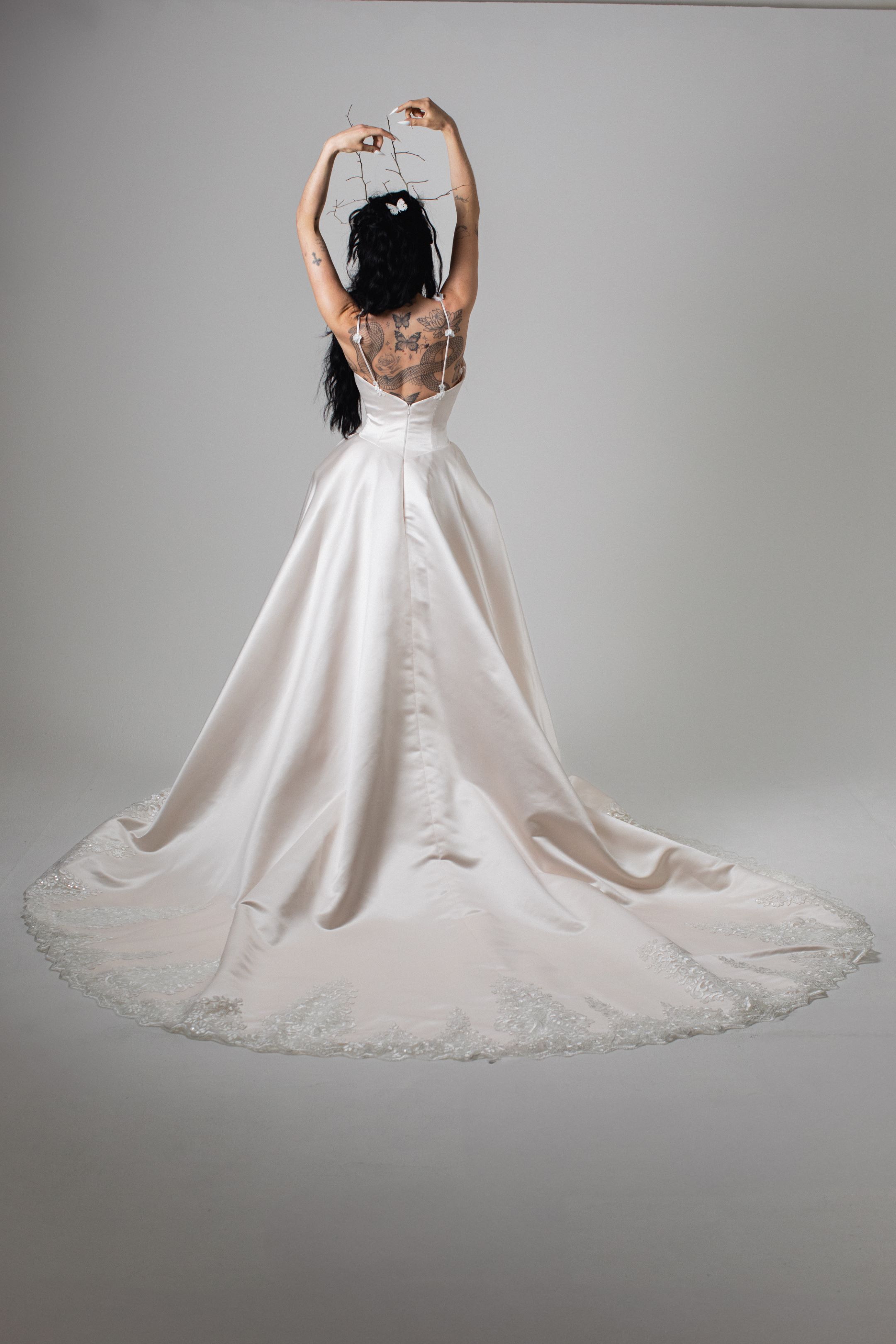
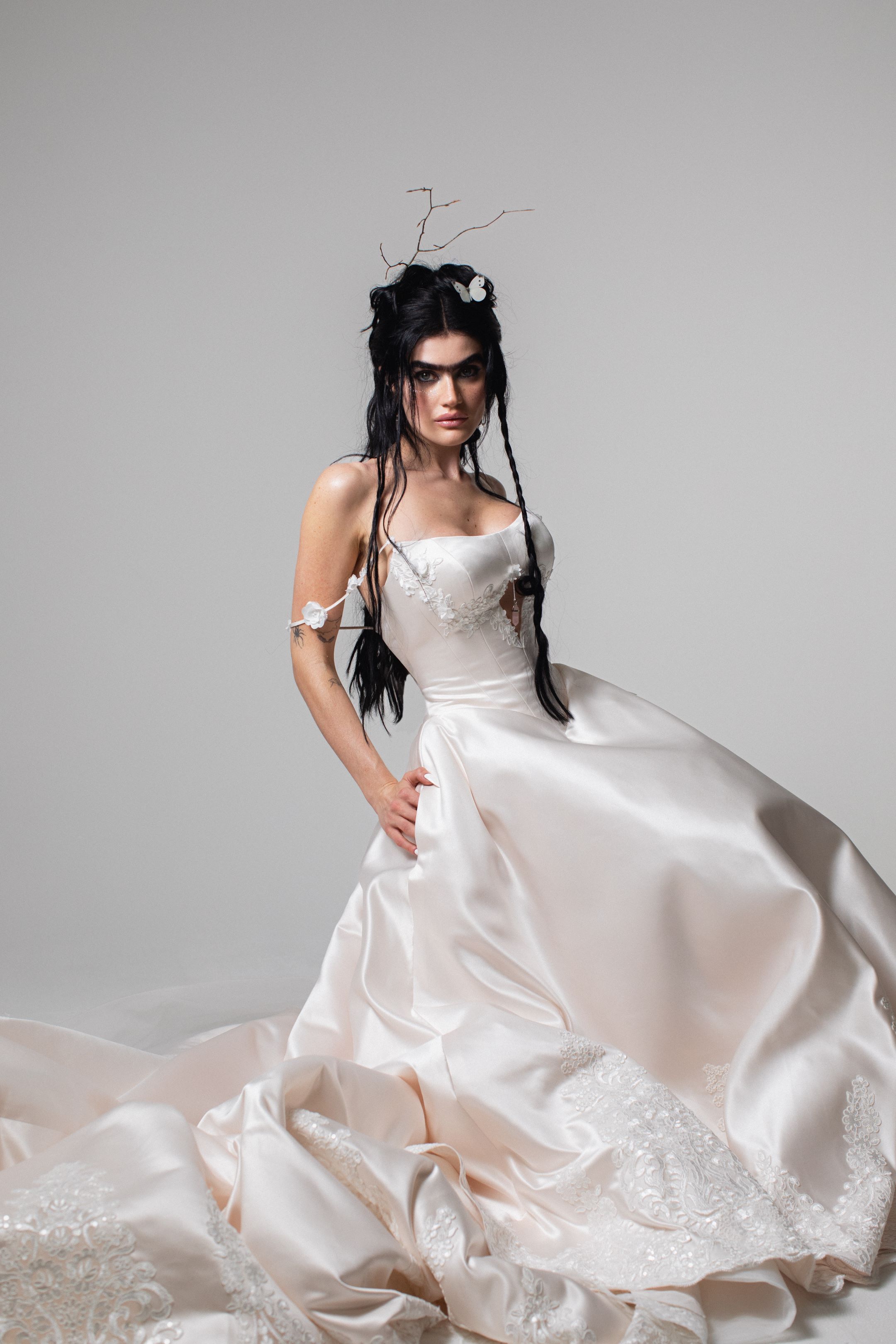
Glinda
Power, wrapped in pink.
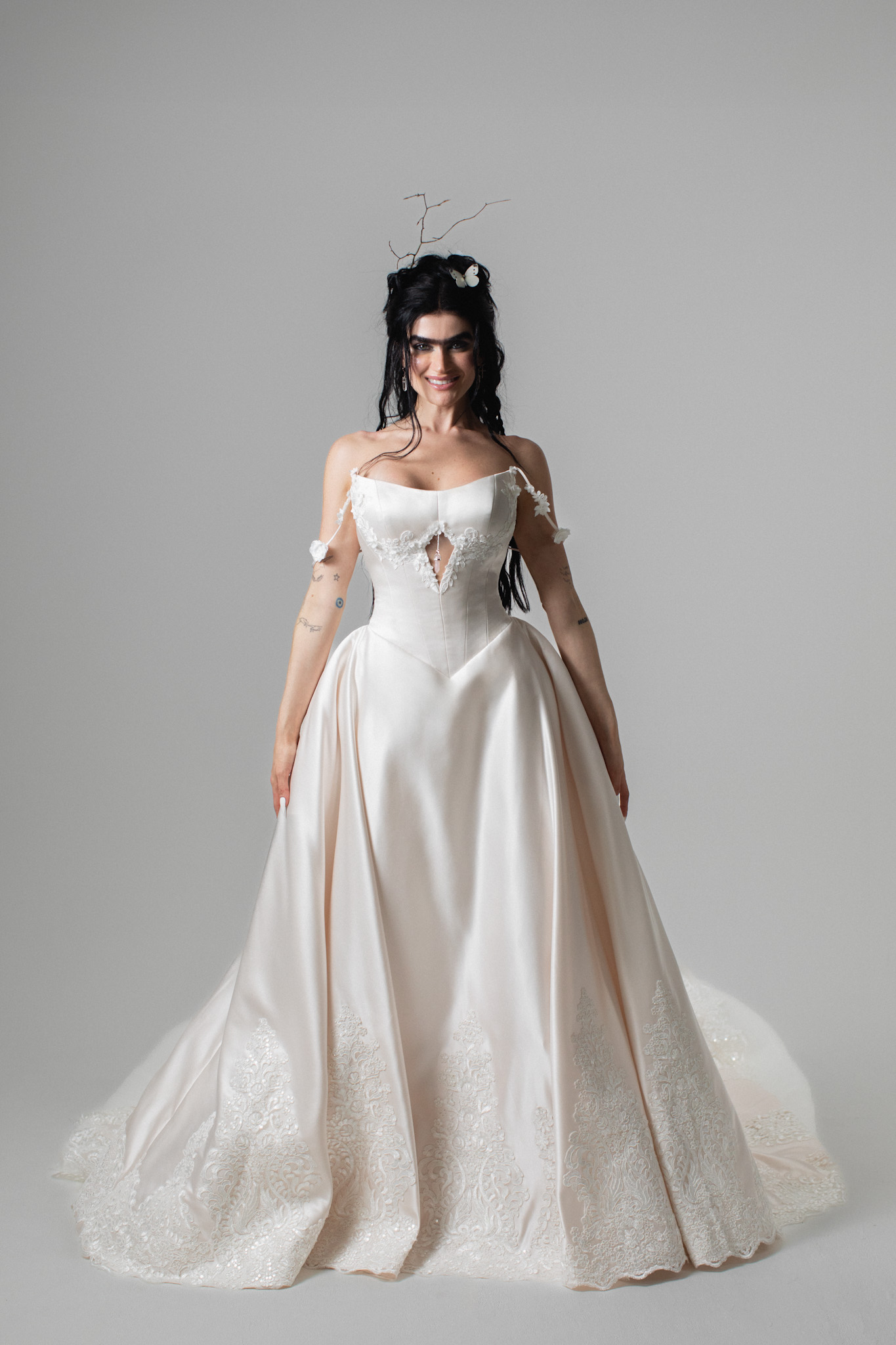
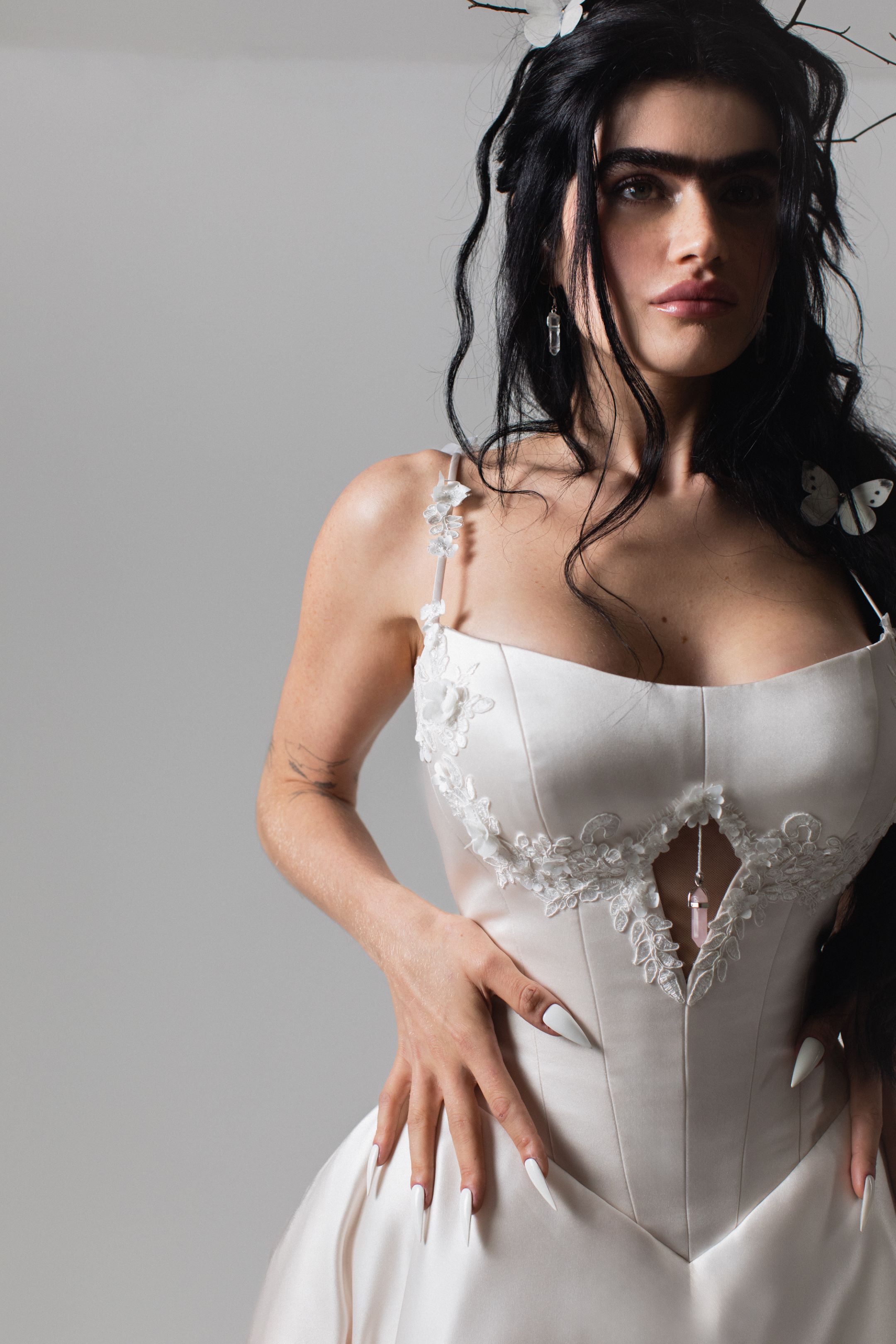
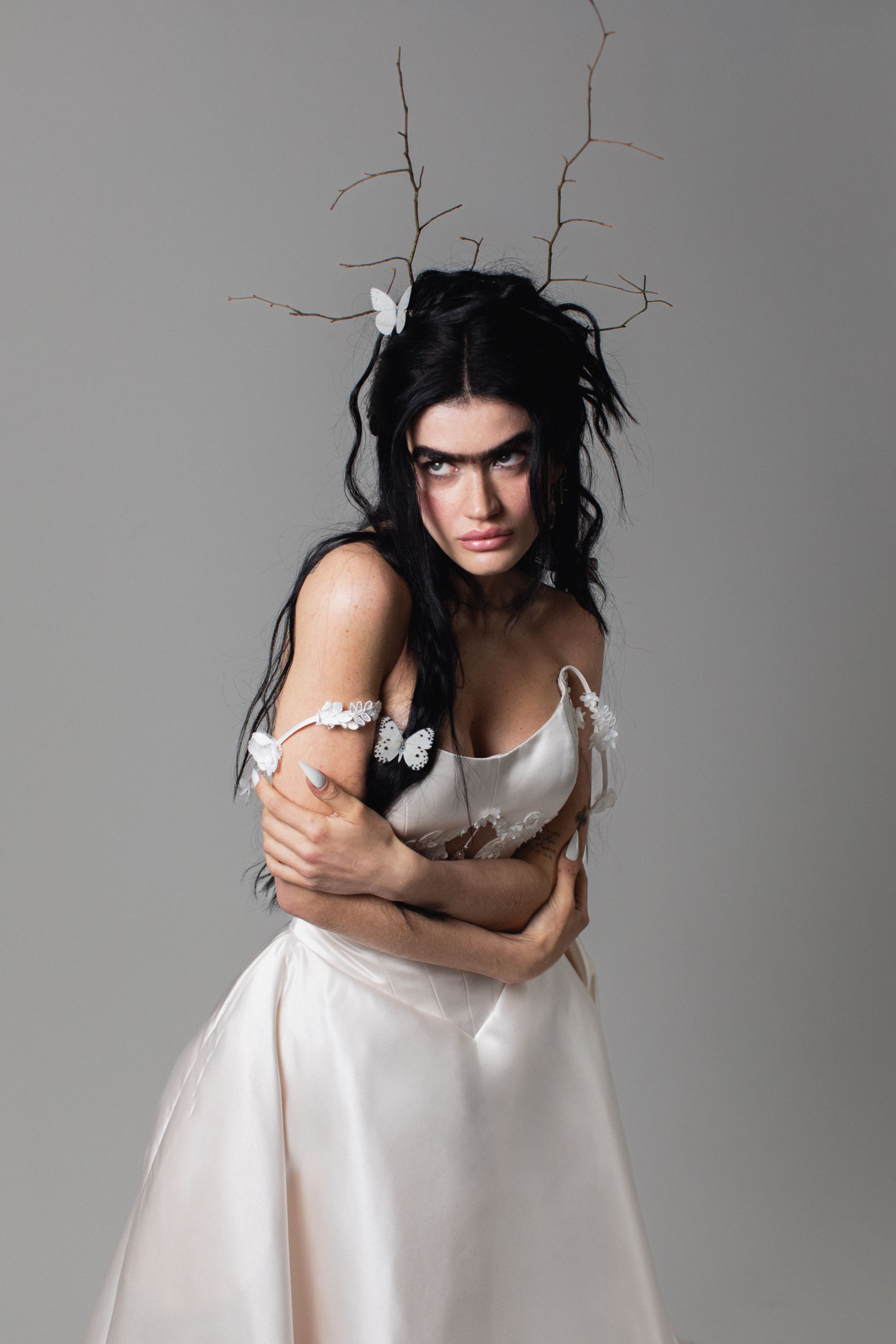
Inspired by Glinda the Good Witch. Cut in weighty blush satin. Glinda conjures the kind of magic that doesn’t announce itself, but surrounds you. The silhouette is a structured drop-waist, drawing the eye downward before cascading into a voluminous ball gown skirt. Corded lace appliquĂ© encircles the hem and spills into cut-outs along the train – like spells whispered in motion.
A soft scoop neckline meets satin straps adorned with creeping floral lace. At the centre of the bodice, a diamond cut-out reveals the sternum – a glimpse of vulnerability made sacred. Suspended within, a single rose quartz crystal gleams: the stone of love, empathy, and intuition – Glinda’s true magic.
It radiates the sorcery of belief in goodness, in self, and in the power of women who guide from the light.
Agnes
Accused of raising a storm – so we made her one. Agnes Sampson, midwife and healer, condemned in Scotland’s witch trials and said to have inspired Shakespeare’s Weird Sisters in Macbeth. Falsely charged with conjuring a tempest to drown a king, her memory lingers like salt on the wind.
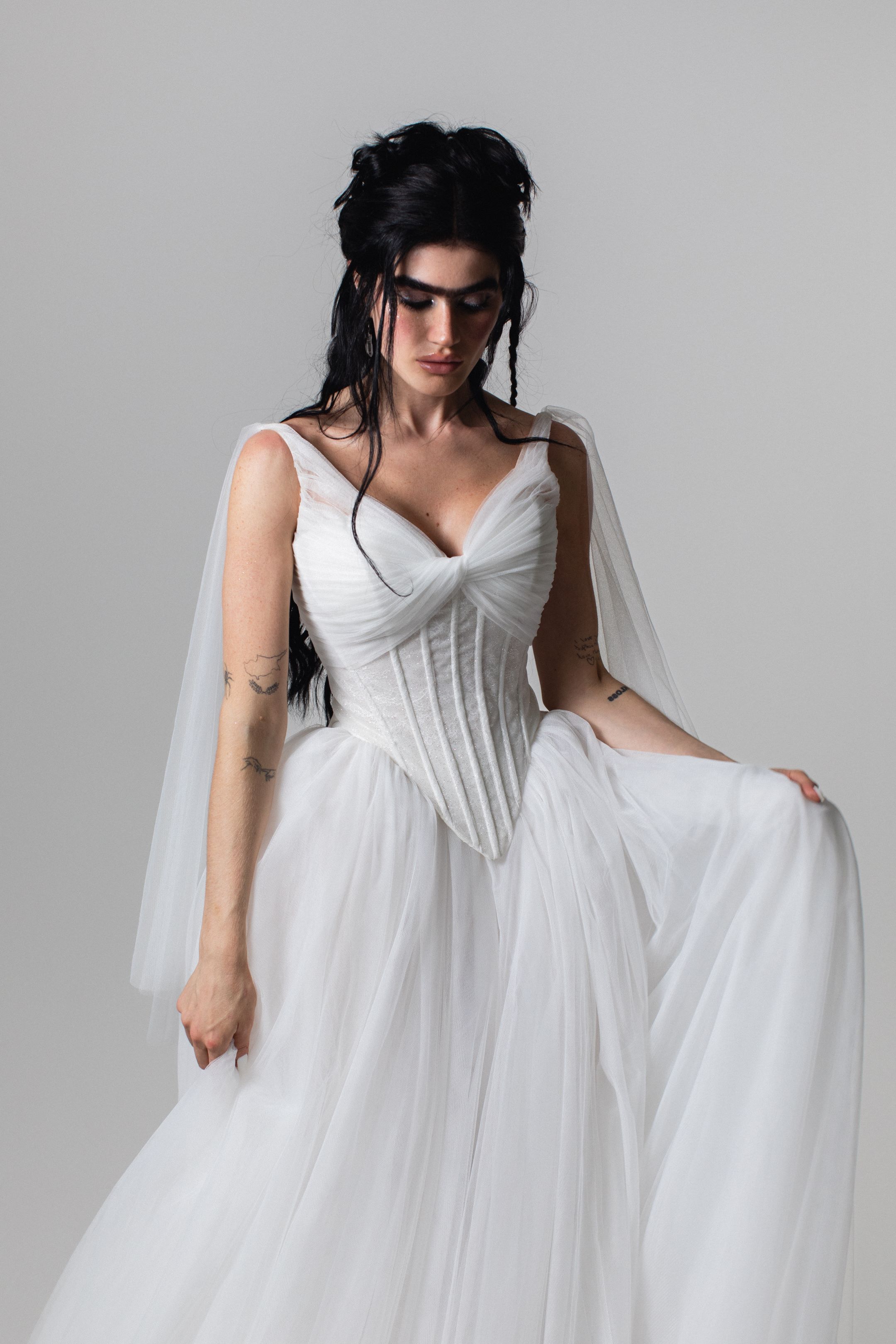
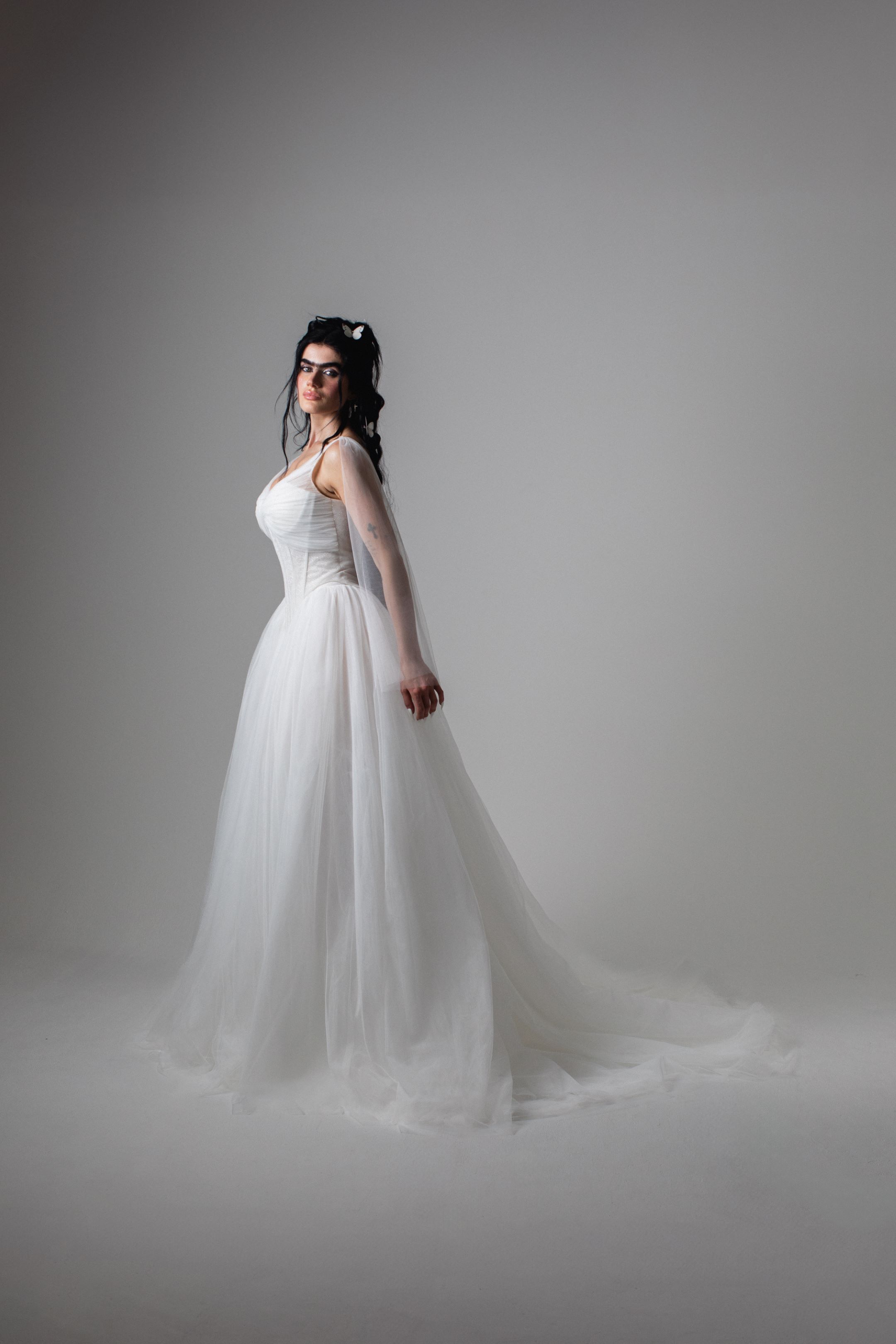
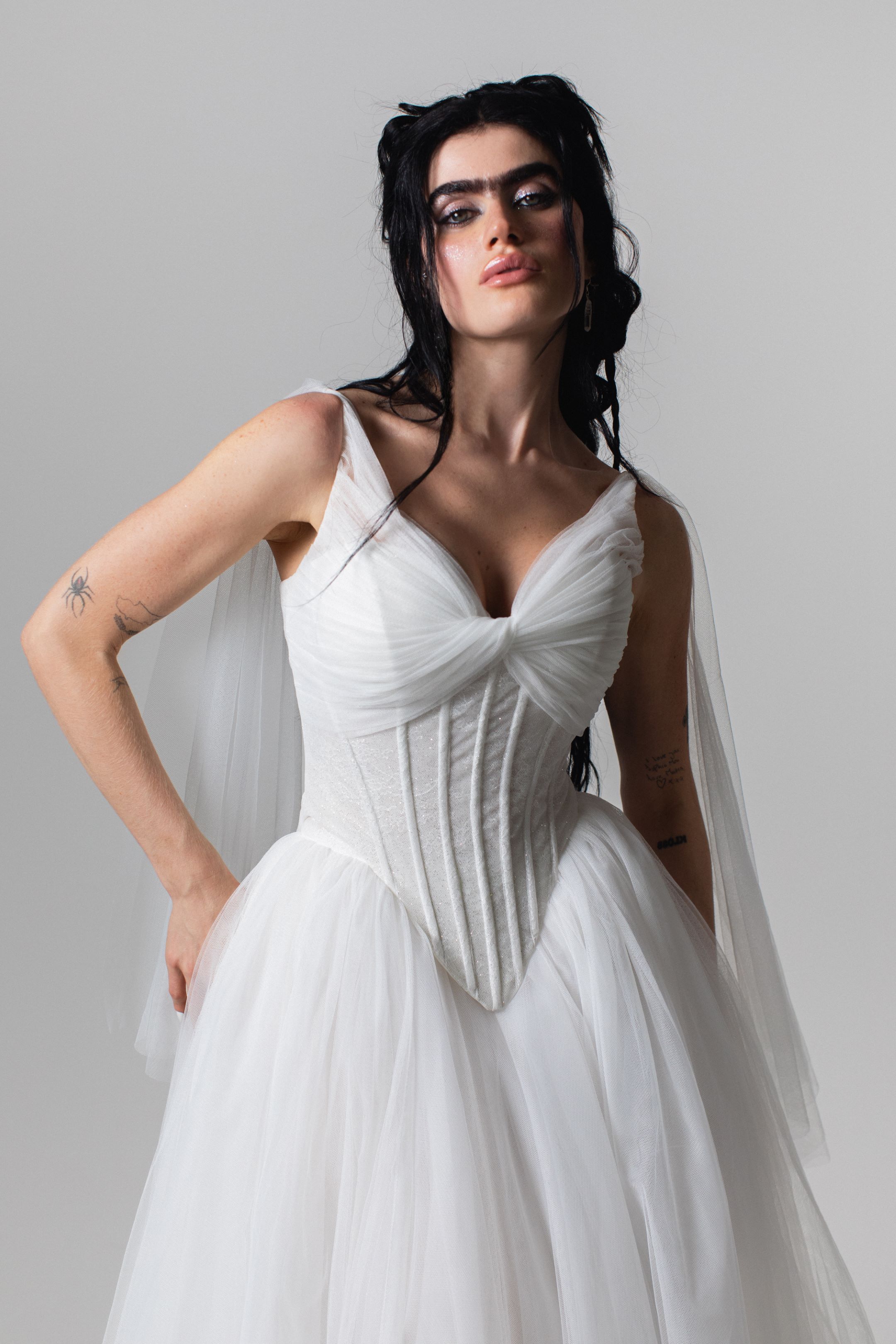
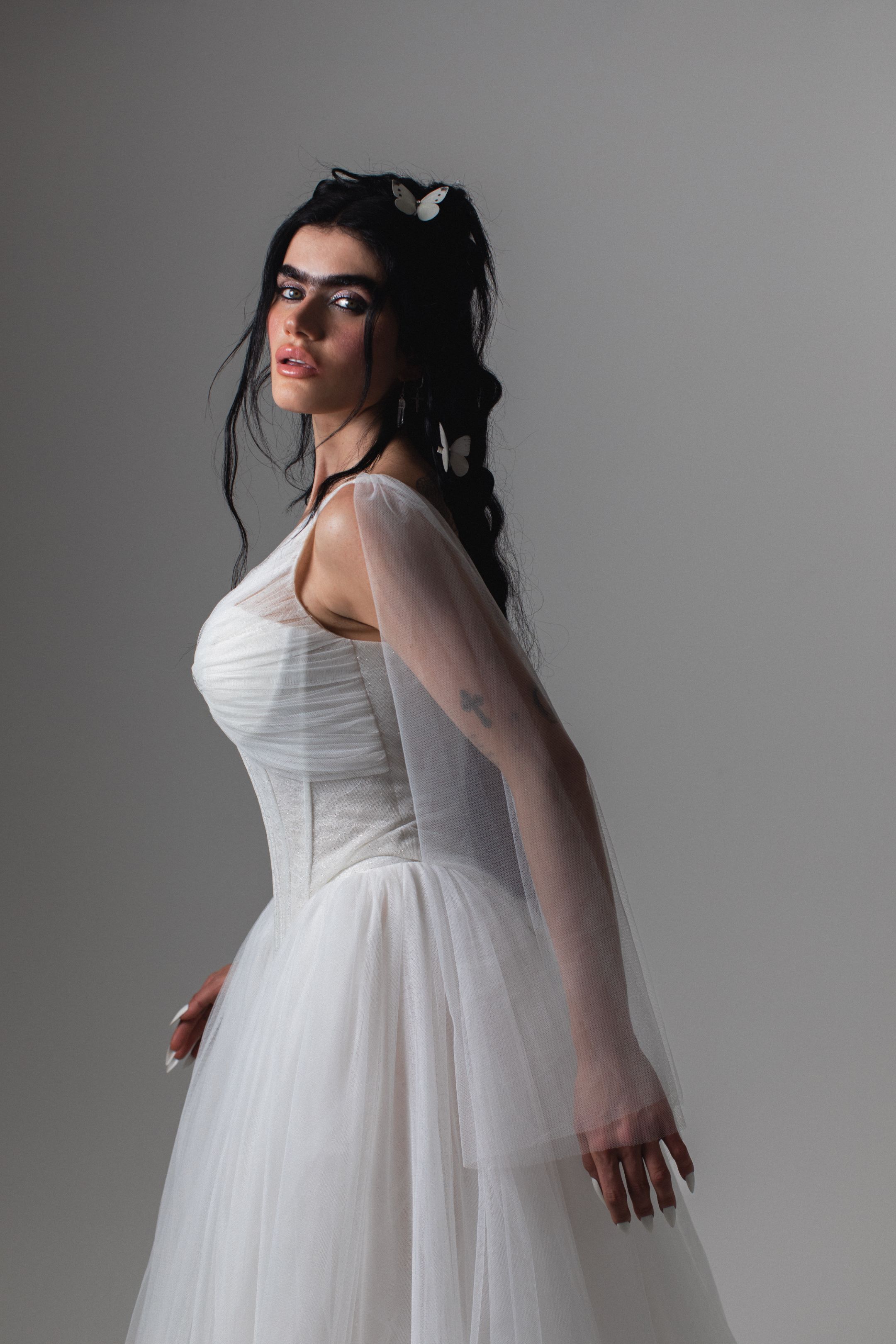
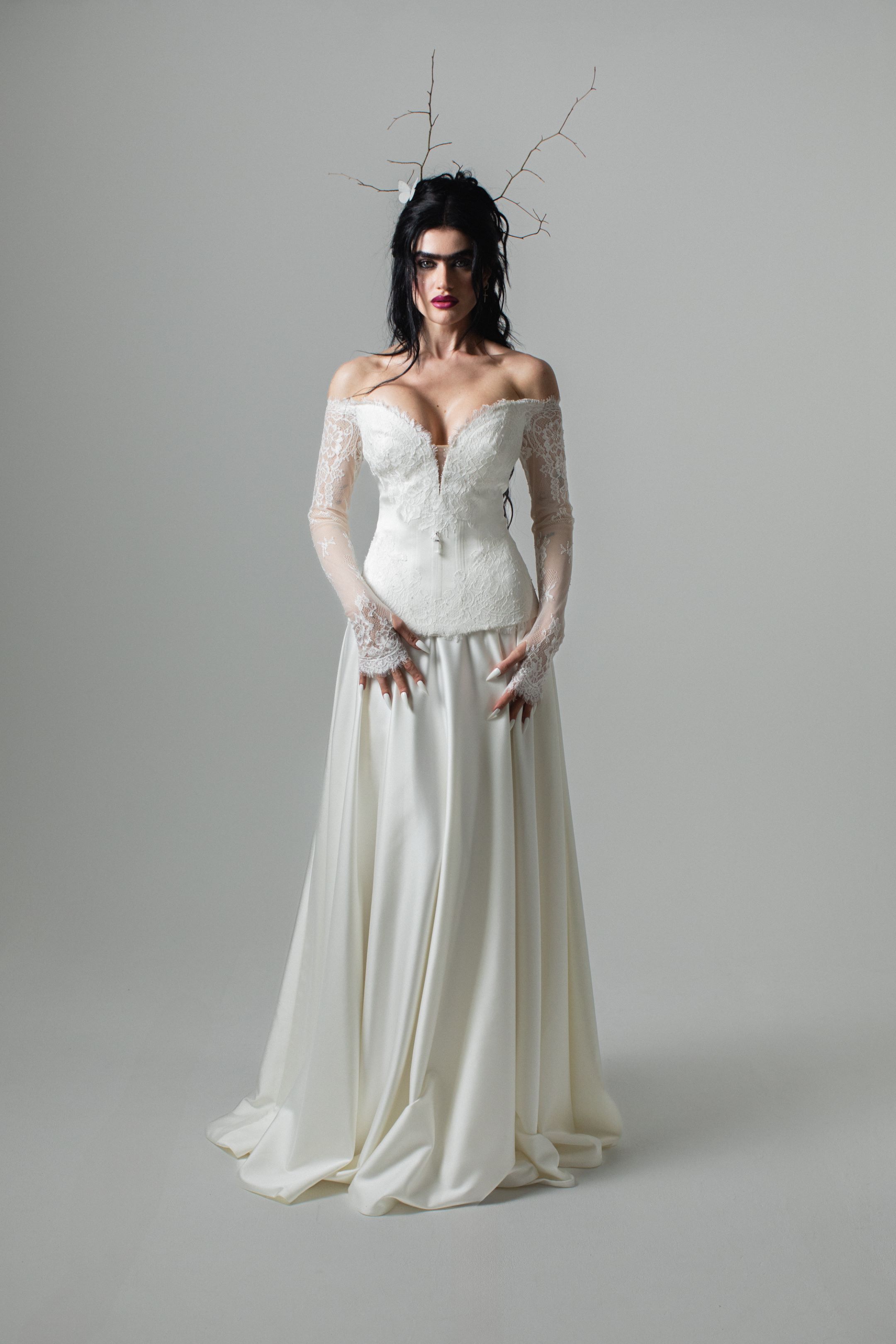
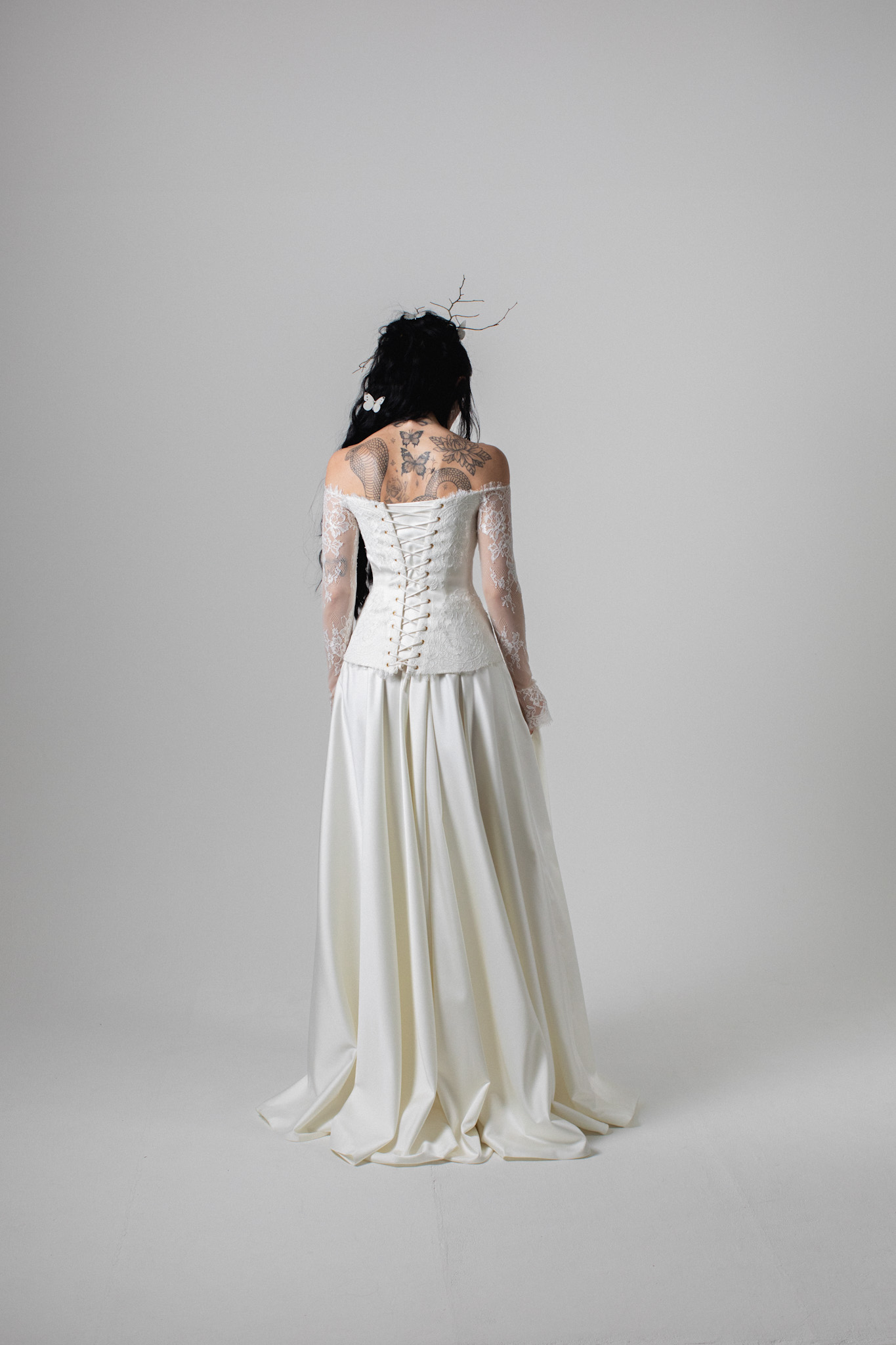
A silk tulle skirt with micro-pleating ripples like sea foam, moving with the softness of waves. Above, an exposed corset shows strength, softened with floral lace – a nod to her herbal knowledge, once revered, then feared. She was tortured. She was silenced. But Agnes endures – the storm returned, soft, sacred, unbroken.
Anna
She was not tried. She was tied
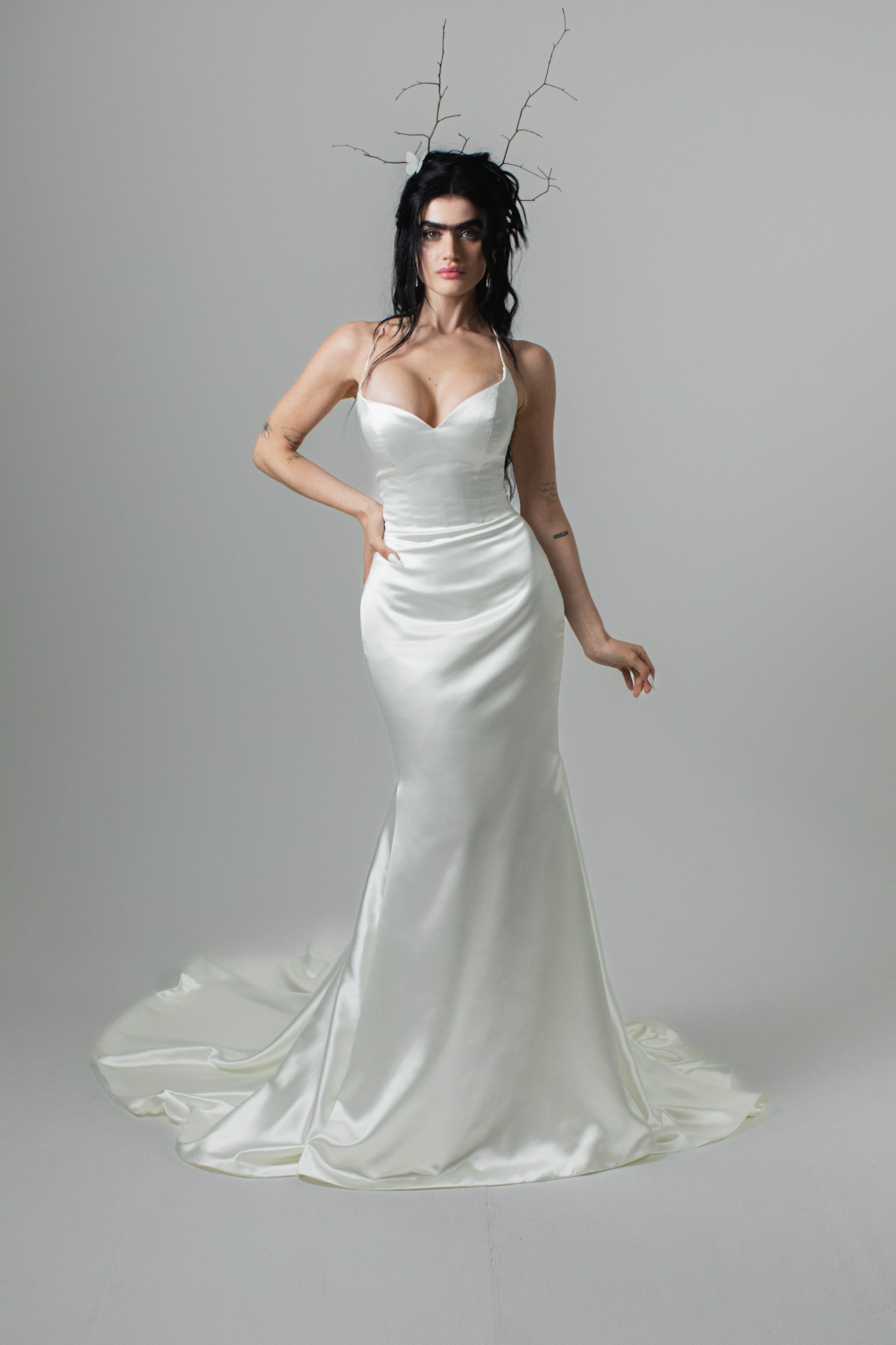
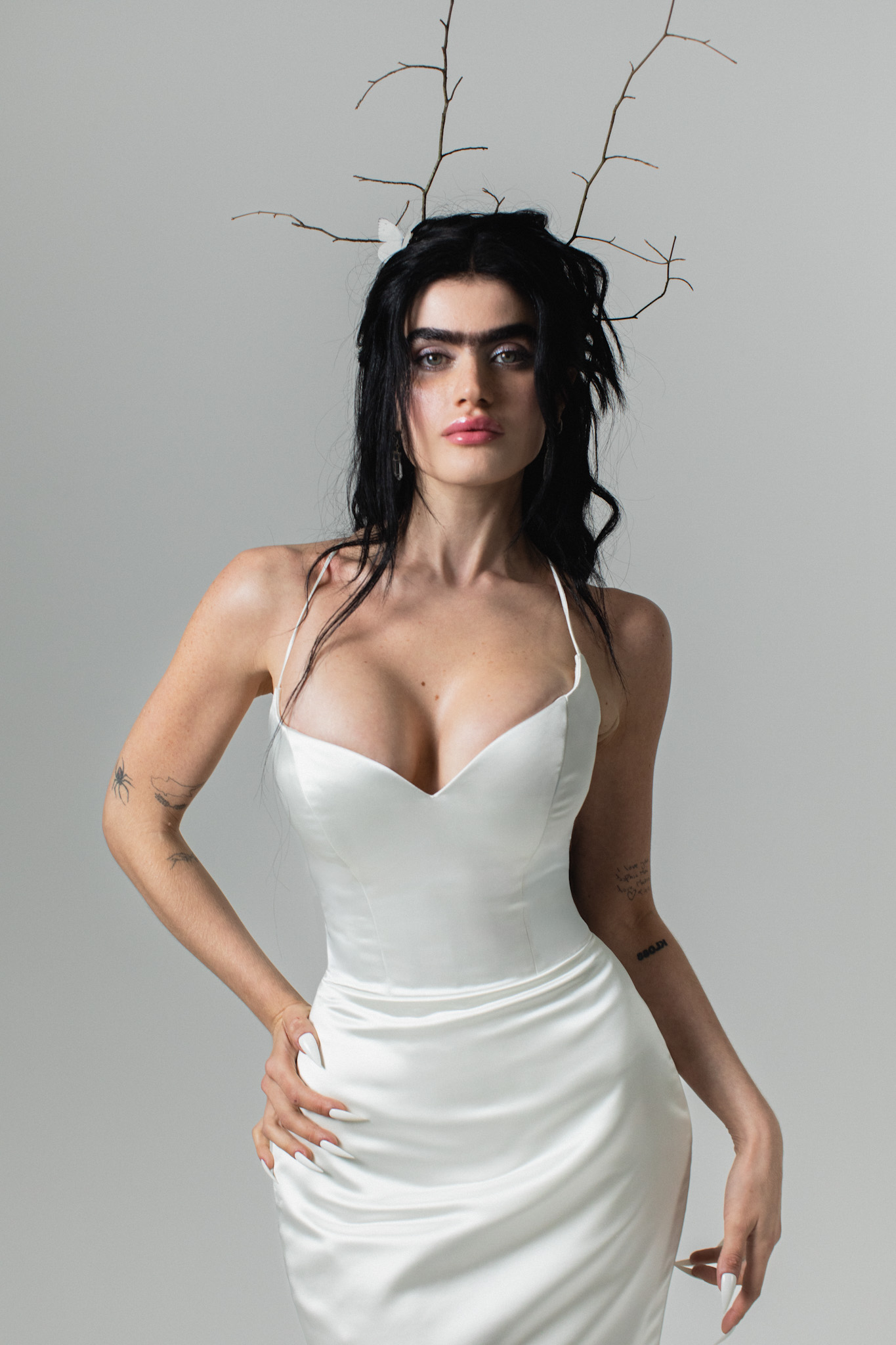
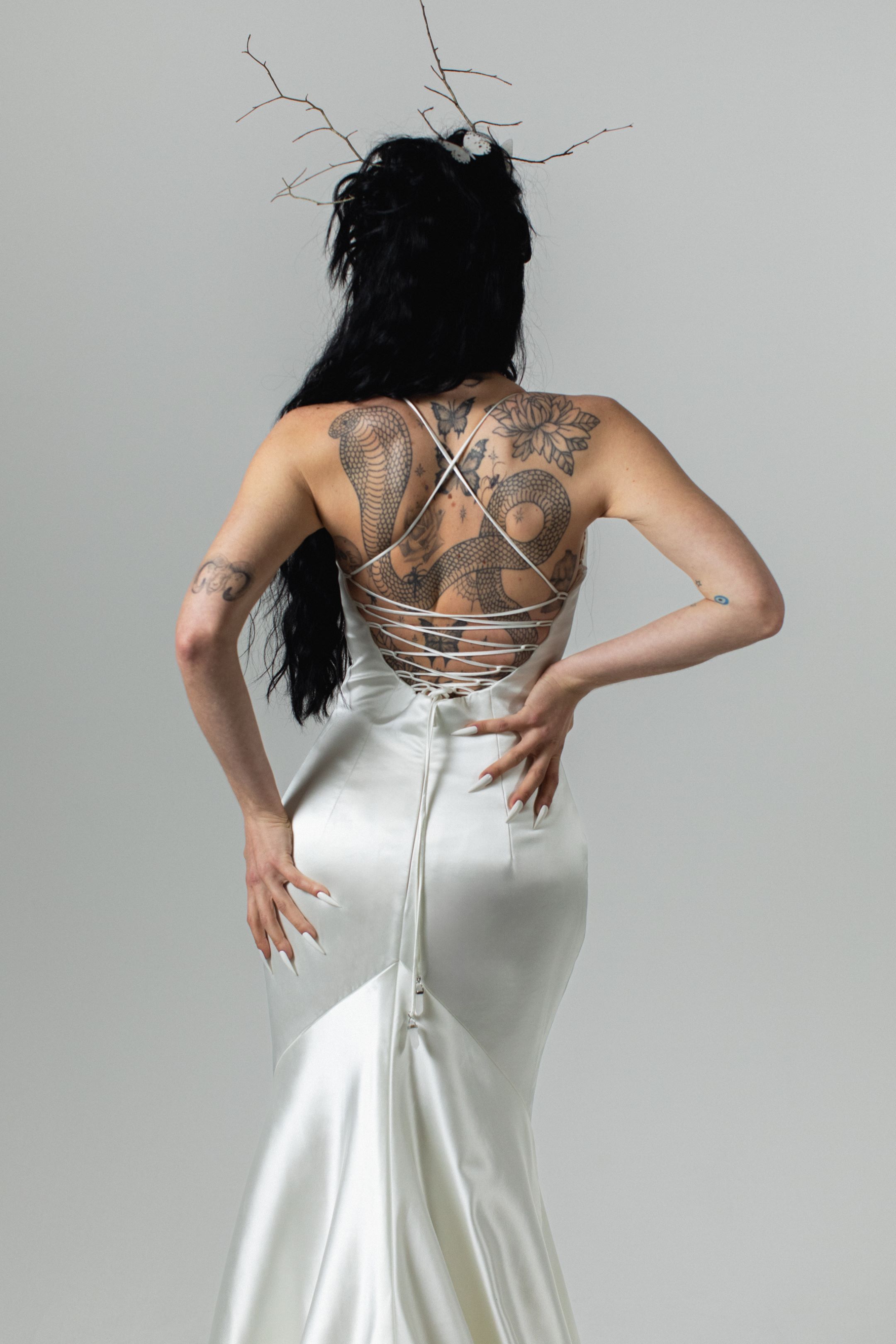
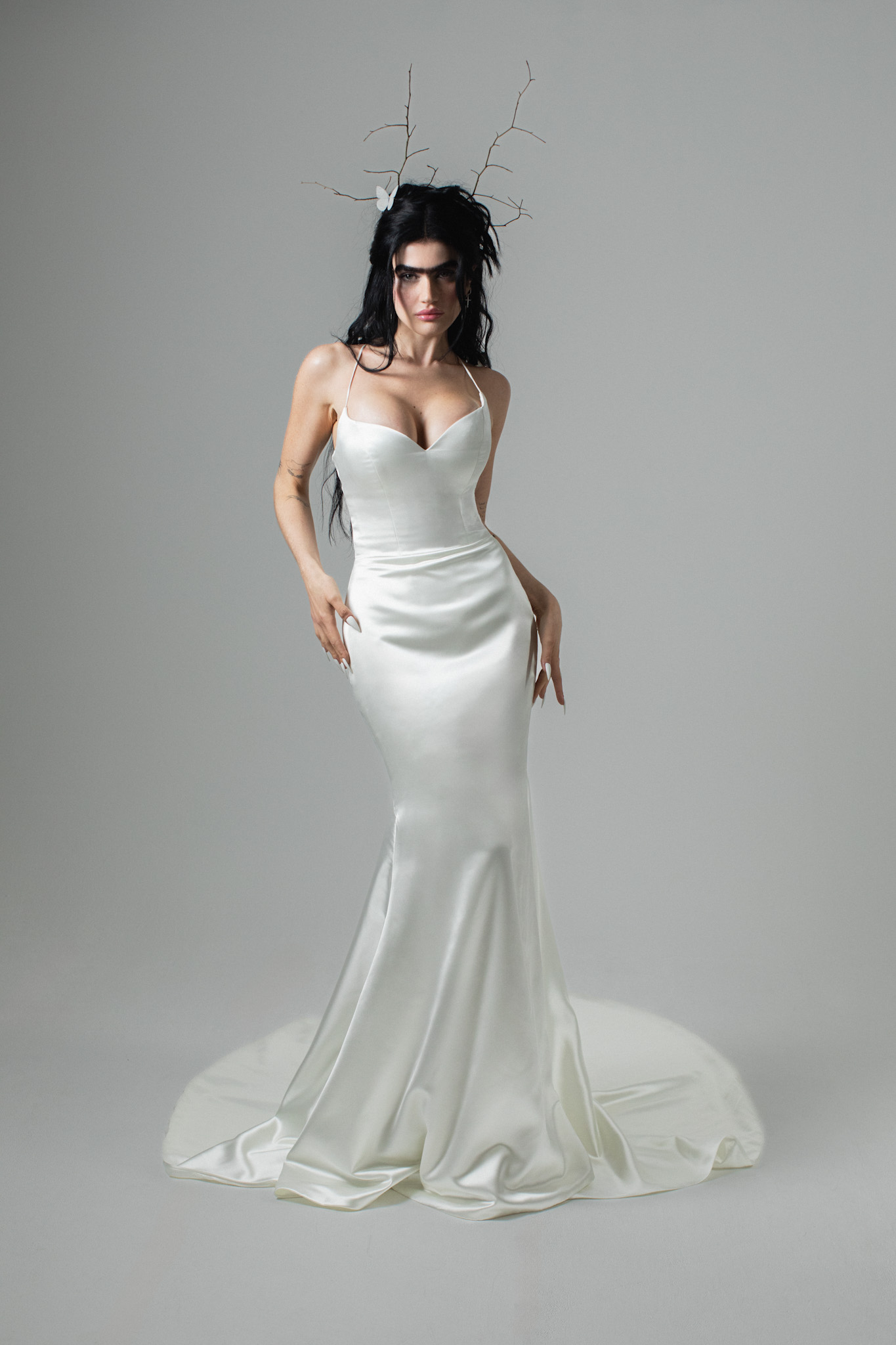
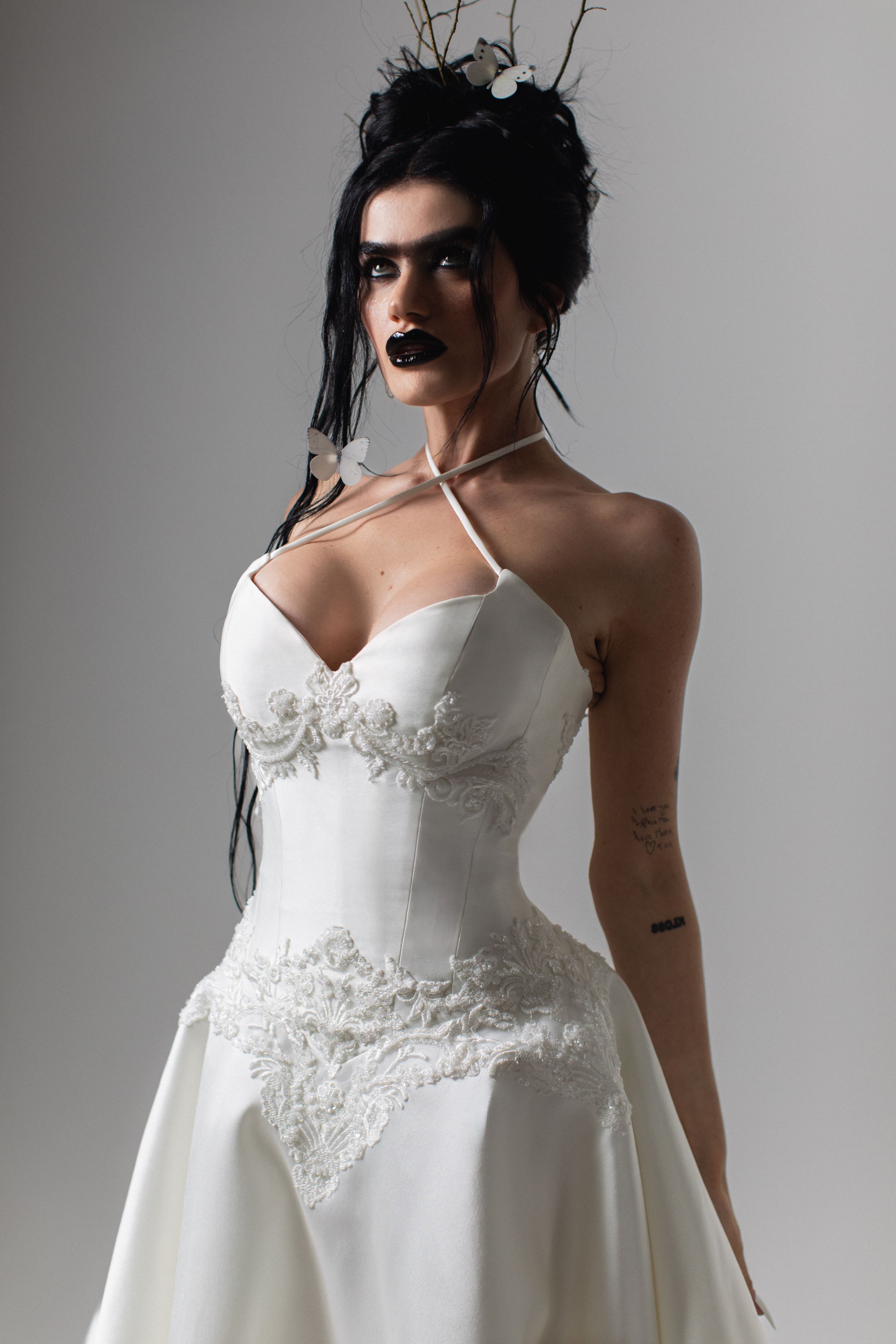
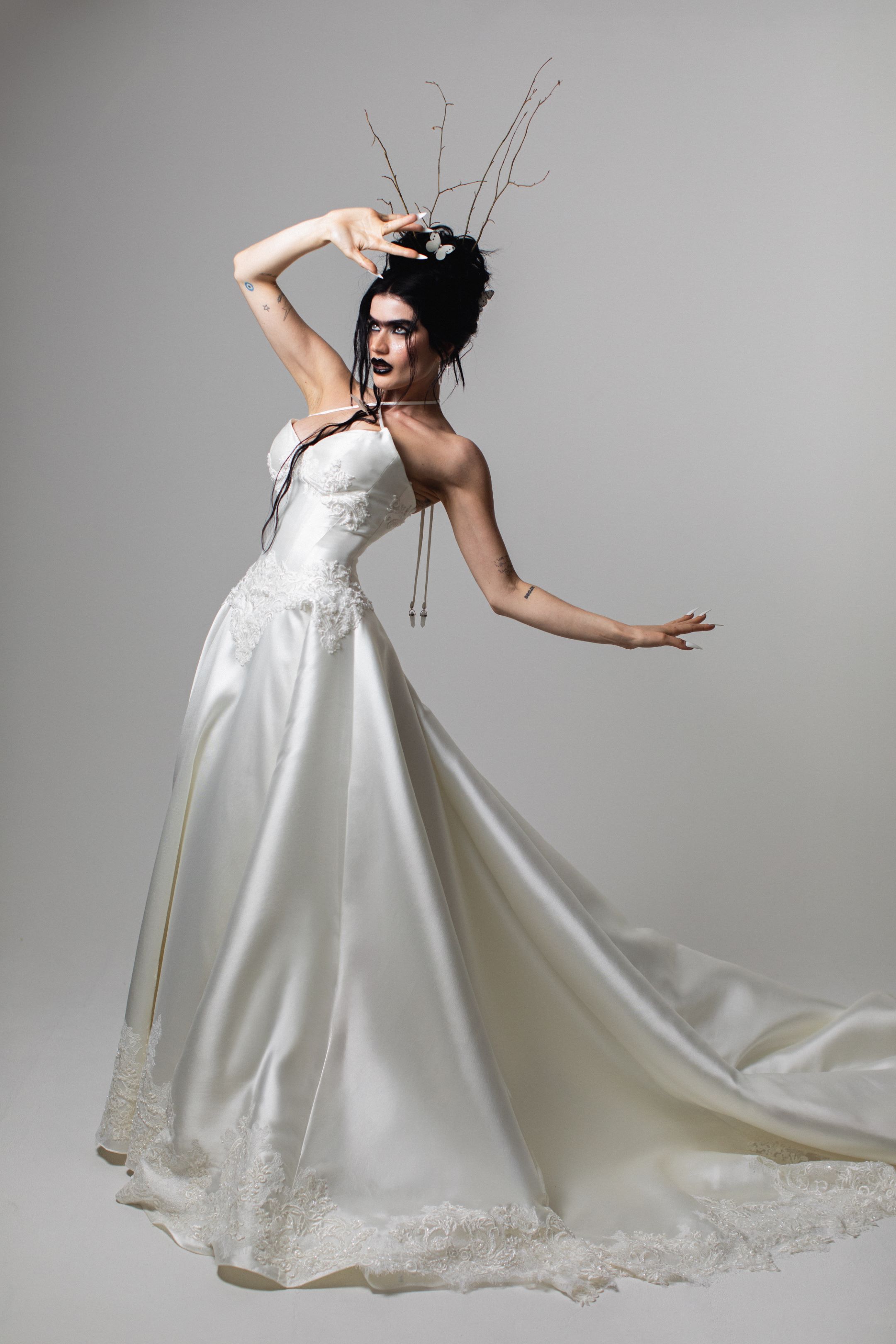
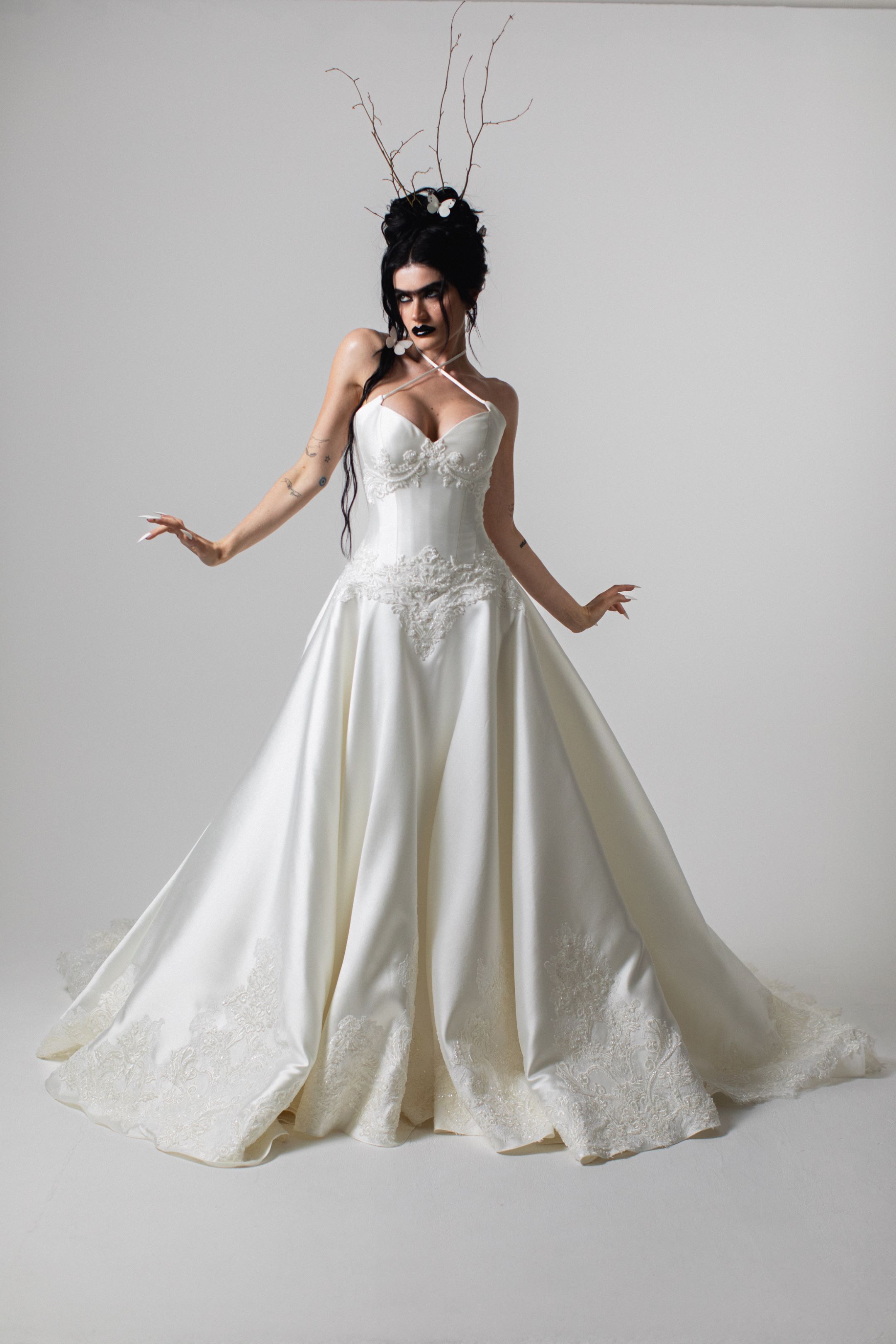
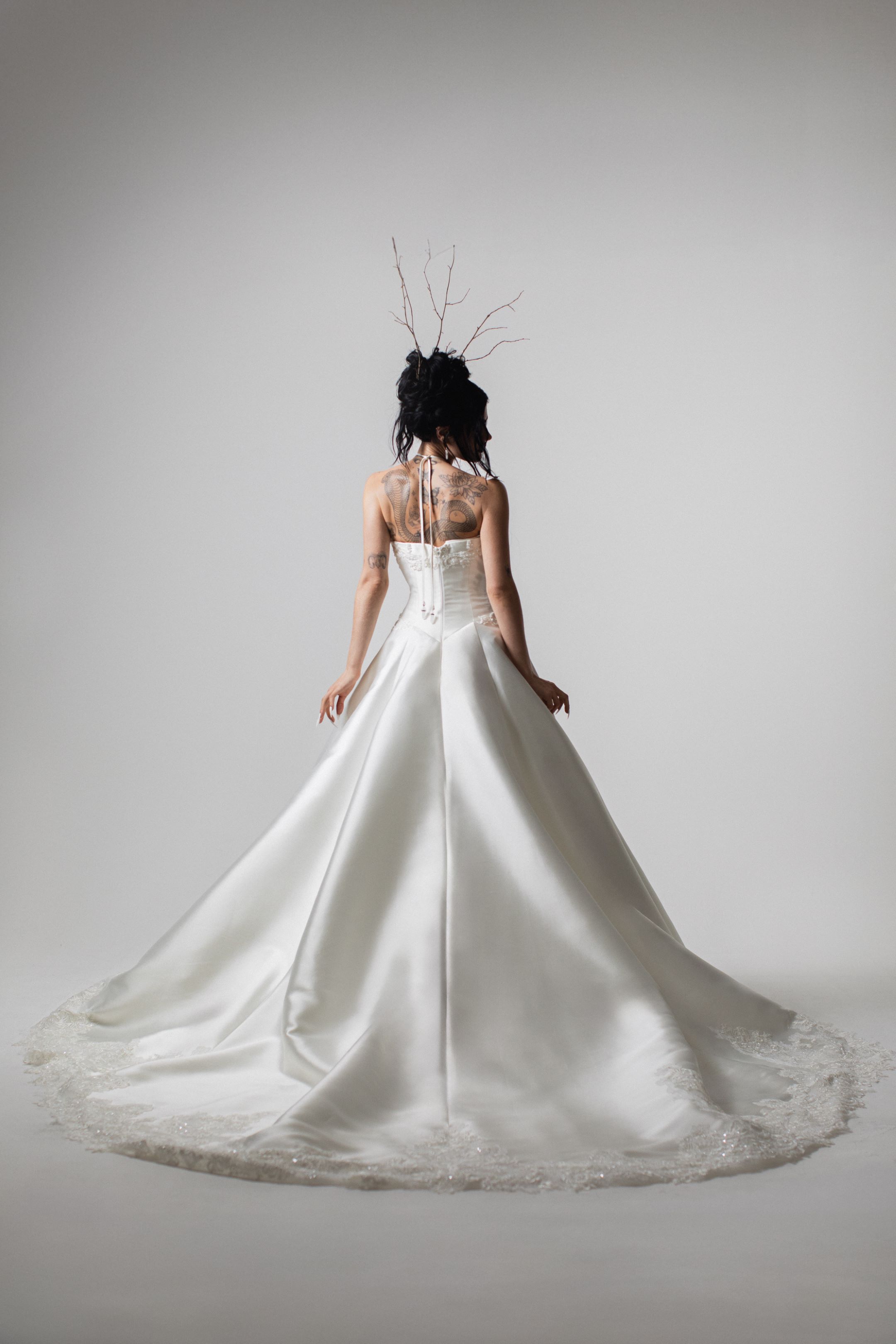
Anna Pappenheimer, Anna is a gown of quiet defiance. Cut in pearl satin, its front is minimal – save for a unique sweetheart neckline that curves before flaring into sharp points near the arms: softness, interrupted.
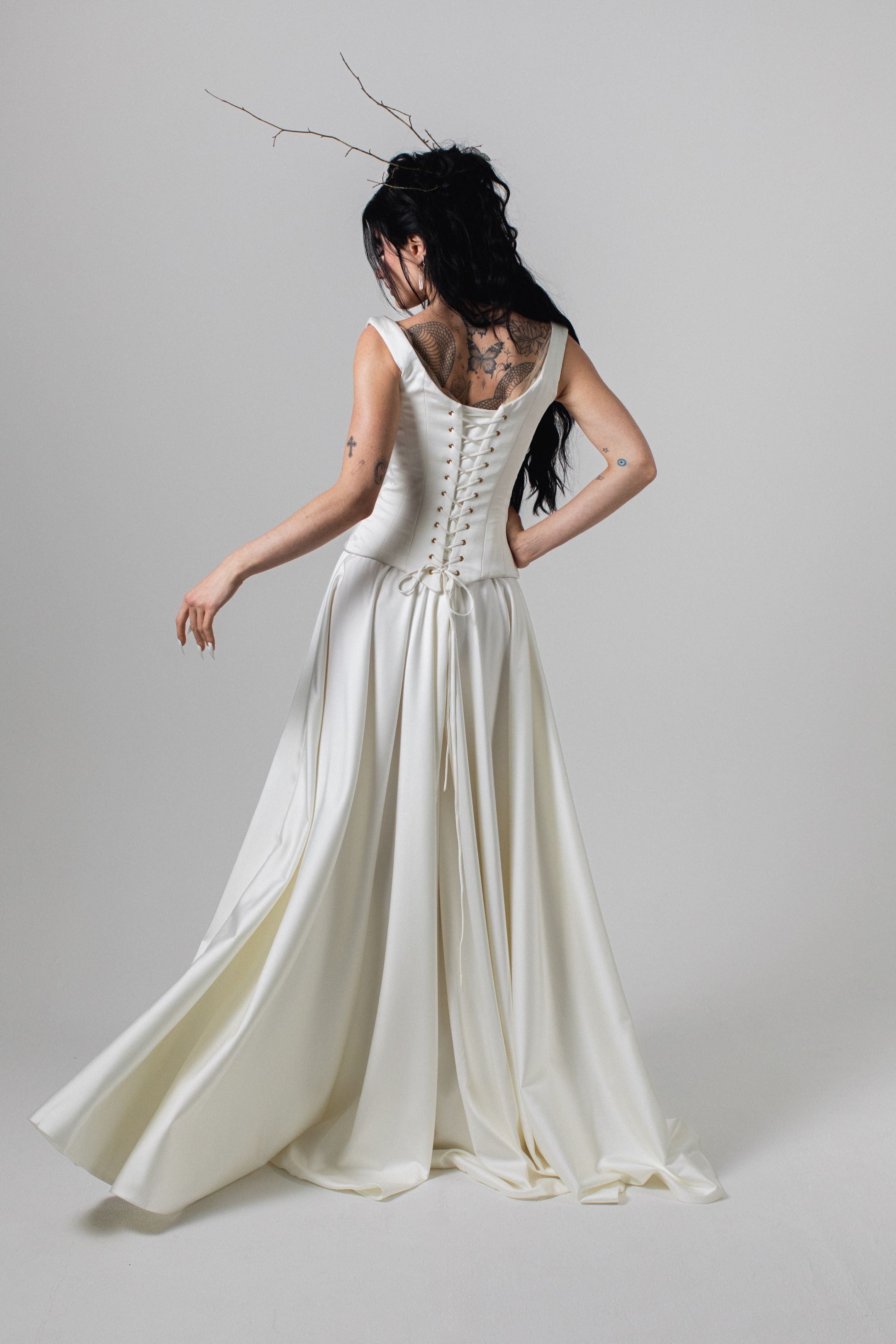
The back bares all. Two silk ties crisscross against exposed skin, binding the bodice like rope – echoing the rope burns that branded her flesh. Each tie ends in raw quartz pendants – talismans of resistance, heavy with meaning.
Anna is a vow in satin.
For the women who were bound, marked, but never broken.


Sycorax
Absent, but not void.
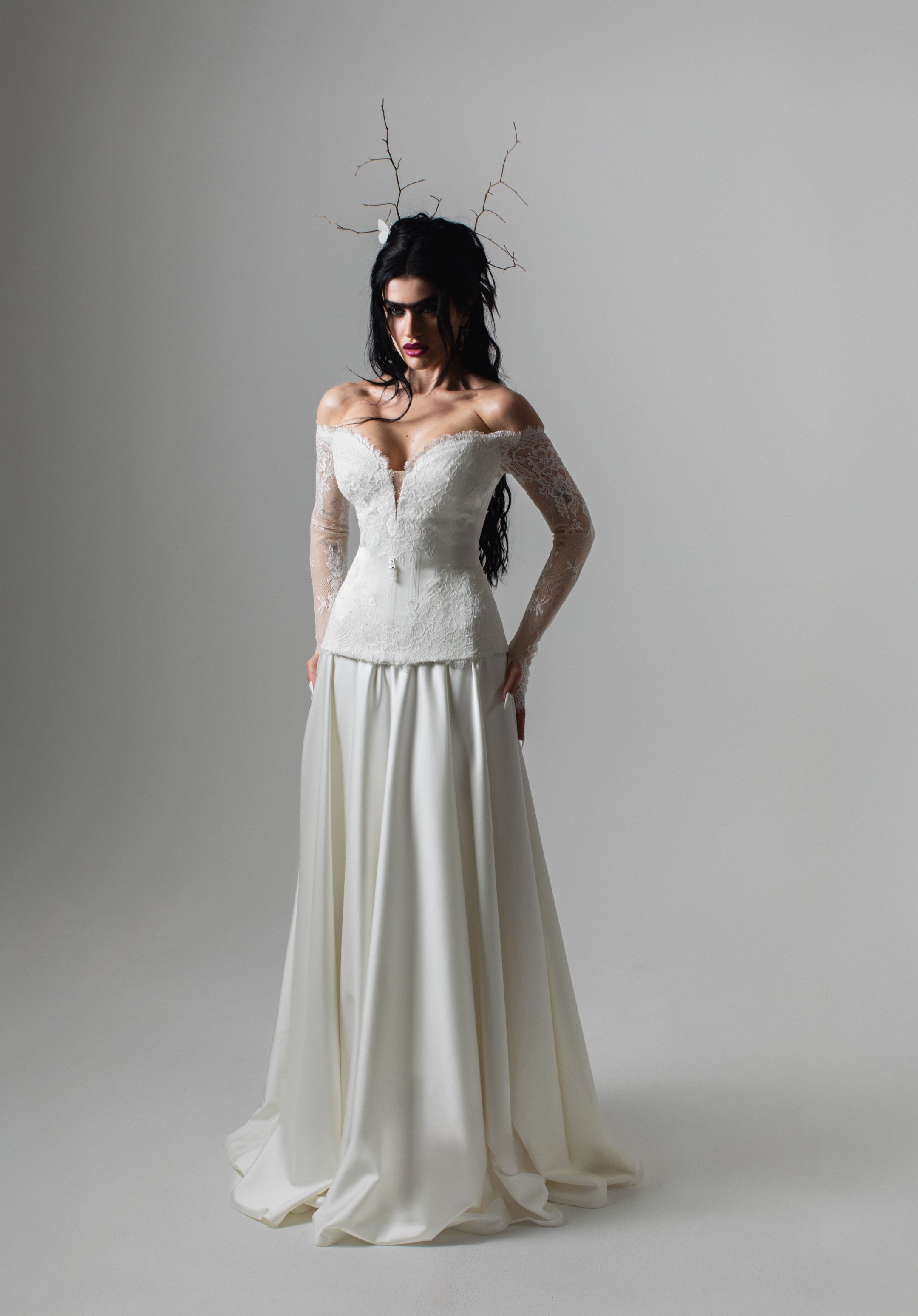
The fully boned corset is sculpted in heavy satin, its strength softened by Chantilly lace appliquĂ©. The use of negative space defines the waist – symbolic of Sycorax’s iconic absence, the silenced witch of The Tempest.
At the corset’s centre, a single raw quartz pendant hangs – elemental, untamed, luminous. A quiet relic of power erased but not extinguished.
Below, a full A-line skirt flows in luxurious satin, falling from the waist like the waters Sycorax once commanded – tidal, eternal.
Prospero, a man, is celebrated for the same ritualistic magic that condemned her.
Sycorax – cast out, unspoken – remains one of literature’s most powerful absences.
This gown remembers her.
Hekate
Goddess of magic, moon, and crossroads.
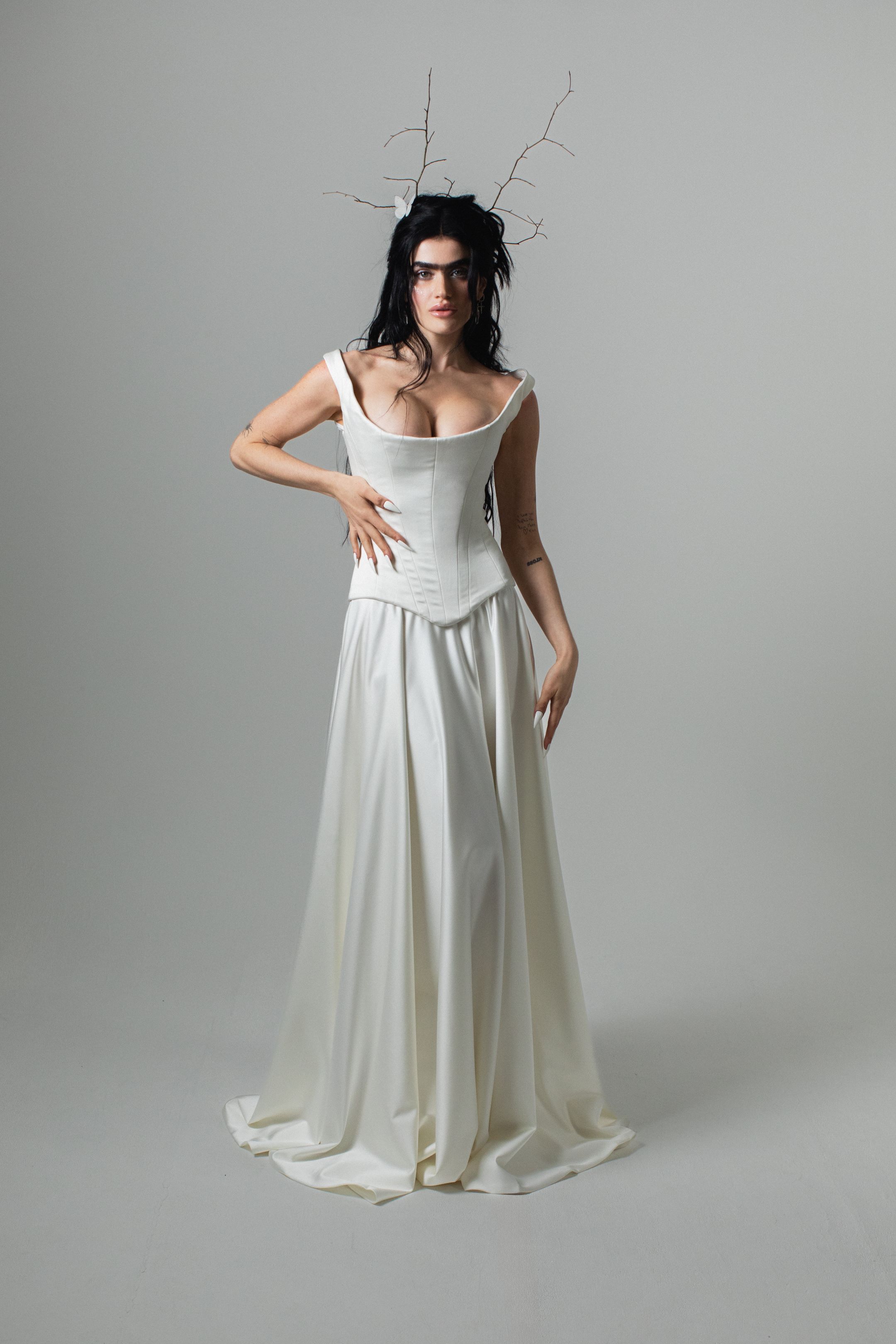
This gown is a living symbol. Sleeves cut on the bias in the shape of crescent moons frame a full-circle neckline. Together, they form the Triple Goddess – the sacred emblem of Maiden, Mother, and Crone , weaving timeless power and feminine mystery into every stitch.
Crafted in heavy, structured satin, the Victorian corsetry sculpts the torso with deliberate strength. A full circle skirt flows with lunar grace, echoing the moon’s eternal cycle.
To wear Hecate is to embody the goddess herself – to walk with her power, her dominion over magic and moonlight, and to summon your own.
Lilith
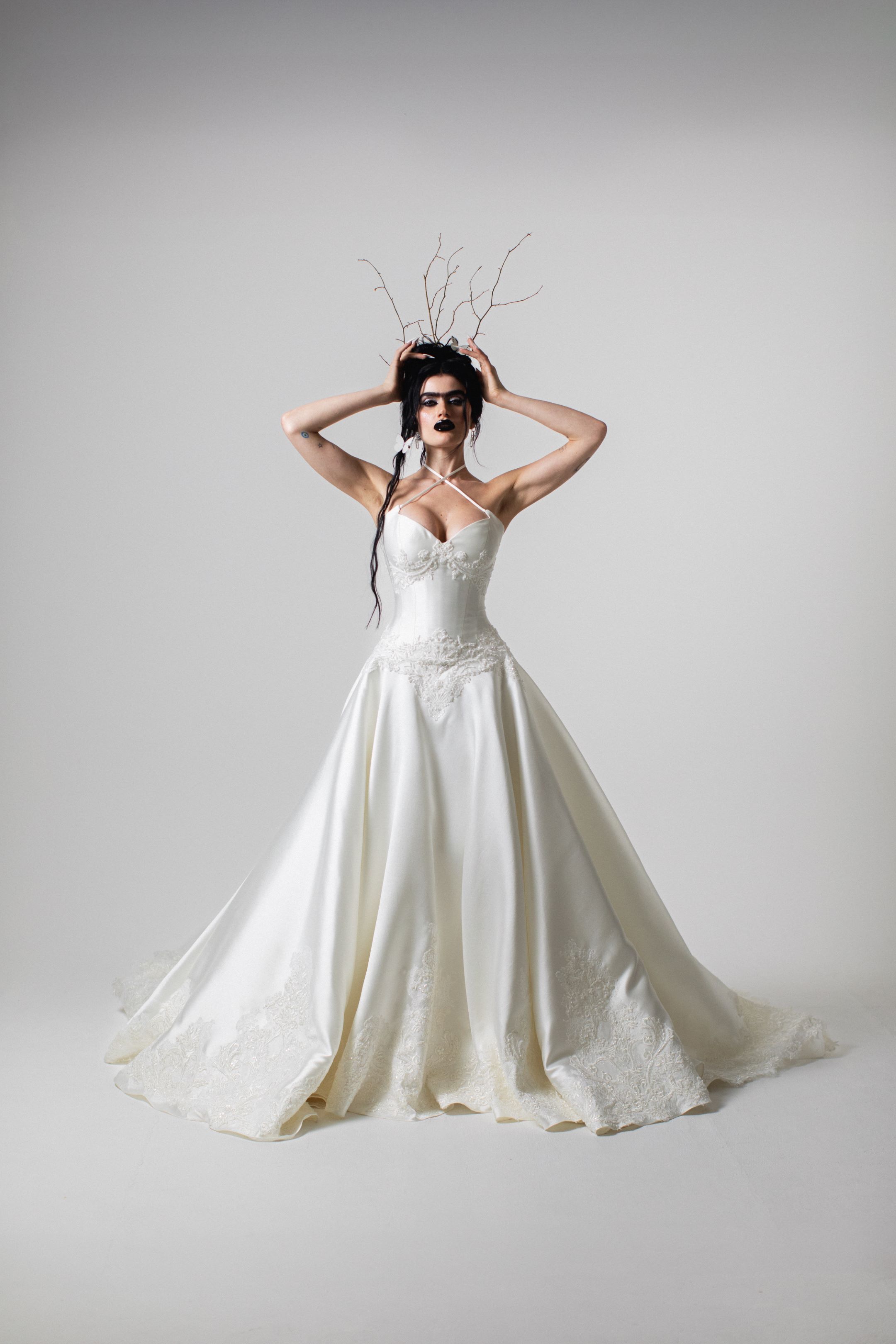
The First woman who would not kneel an ode to Lilith, the ancient feminine force who chose autonomy over obedience, exile over submission.
The silhouette is a study in power and defiance. A fully structured, boned corset with a dramatic basque waist sculpts the torso like armour. Its sweetheart neckline rises into sharp wing-like points, a subtle echo of Lilith’s demonised form. Straps cross over the chest in a protective X at the neck, a binding symbol to ward off harm and seal intention.From the corset falls a full ballgown skirt, ornate lace trails the hem with mirroring lace at the base of the corset – a deliberate nod to Lilith’s association with mirrors as tools of truth and reflection – and frames the womb with quiet precision, evoking her ties to both creation and refusal.To wear this dress is to call upon Lilith the eternal force of feminine truth.
Rose
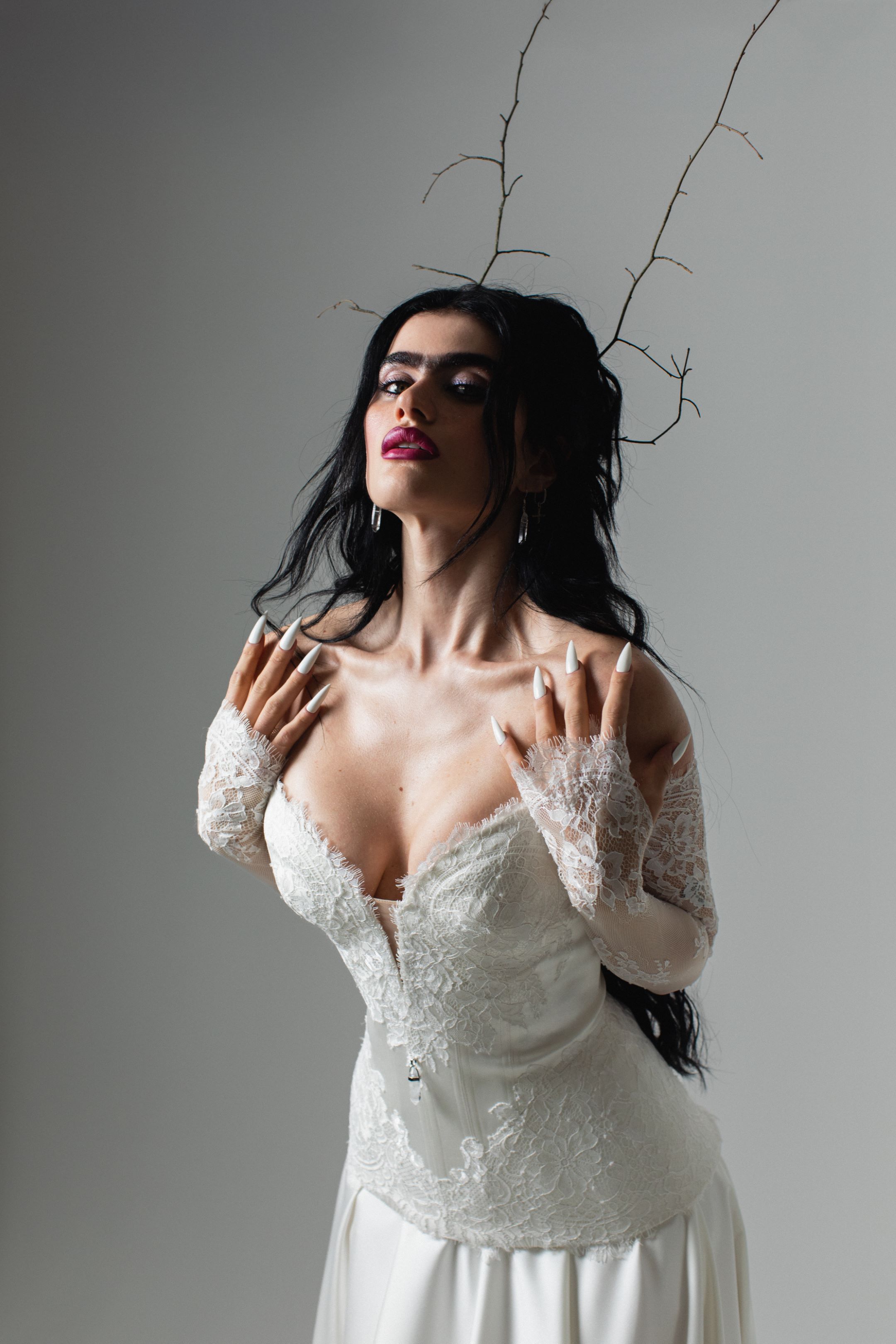
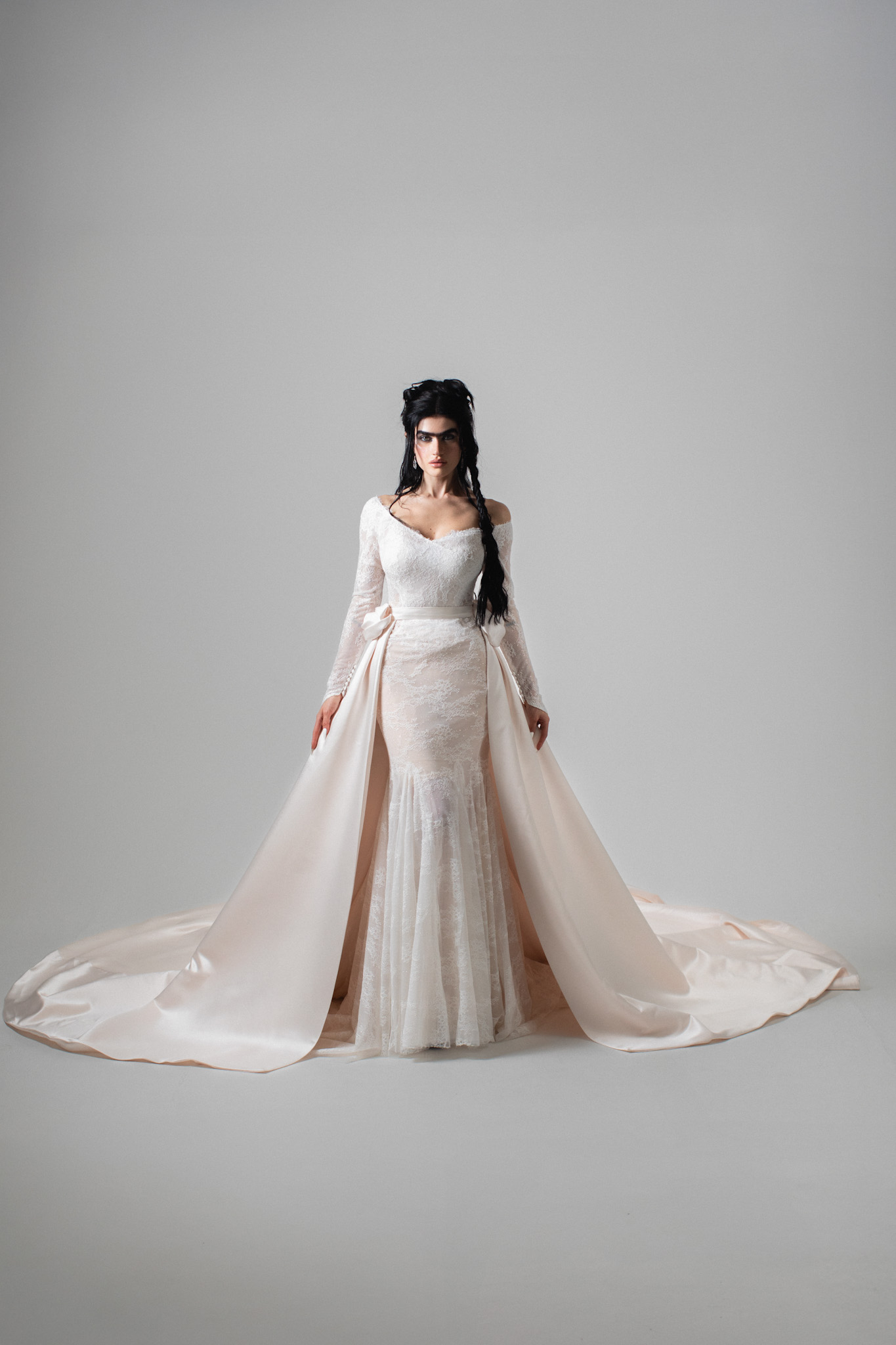
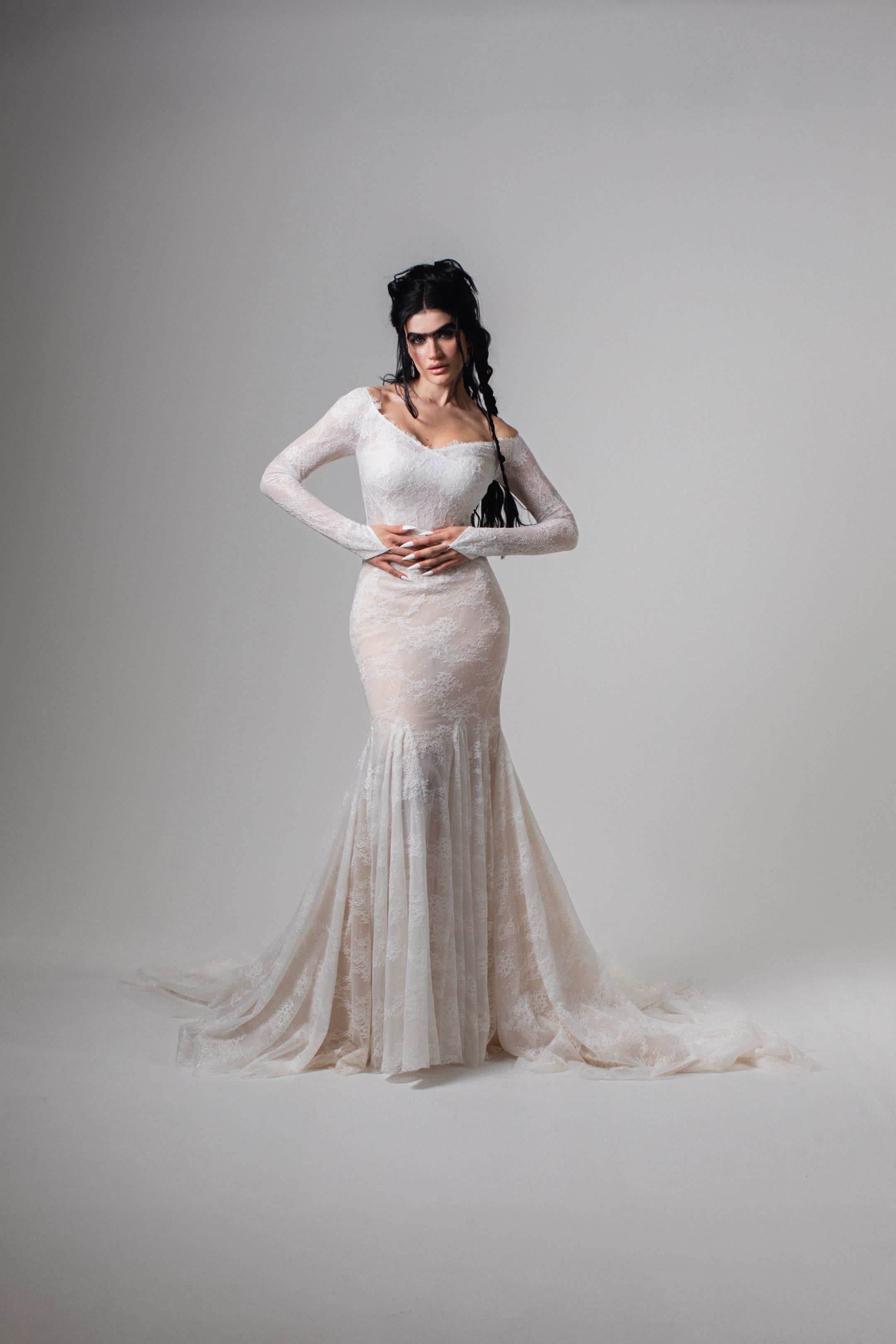
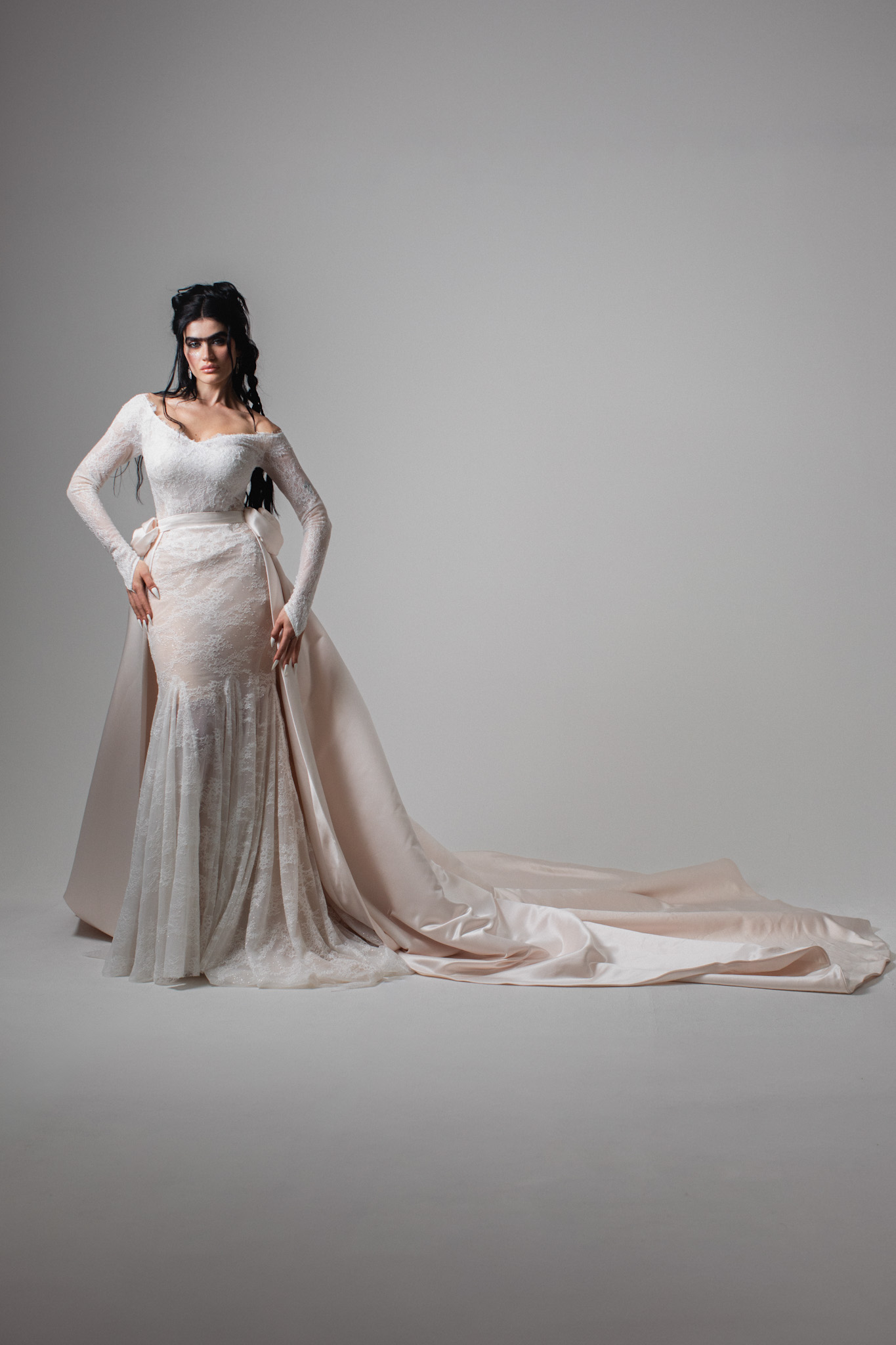
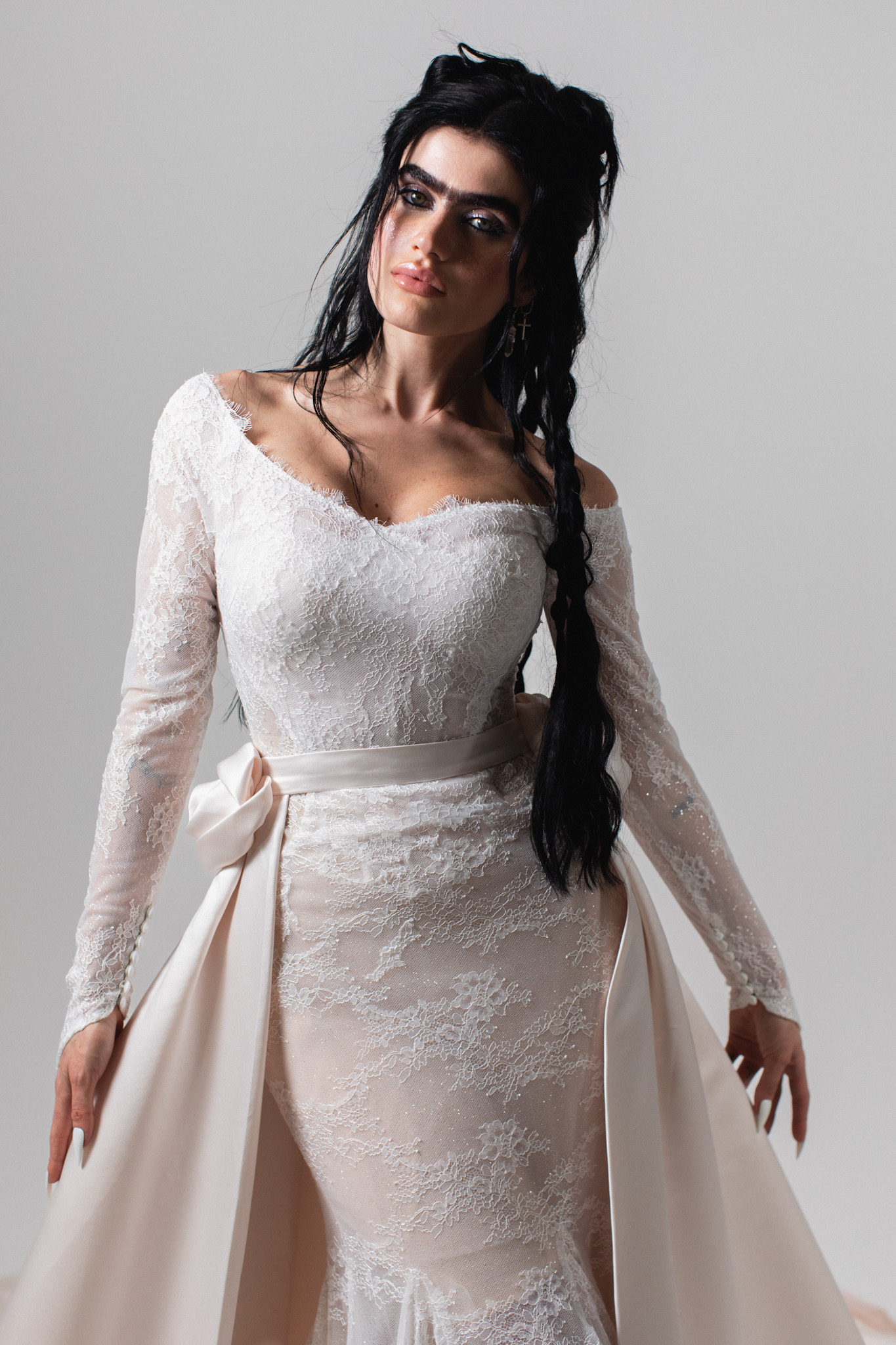
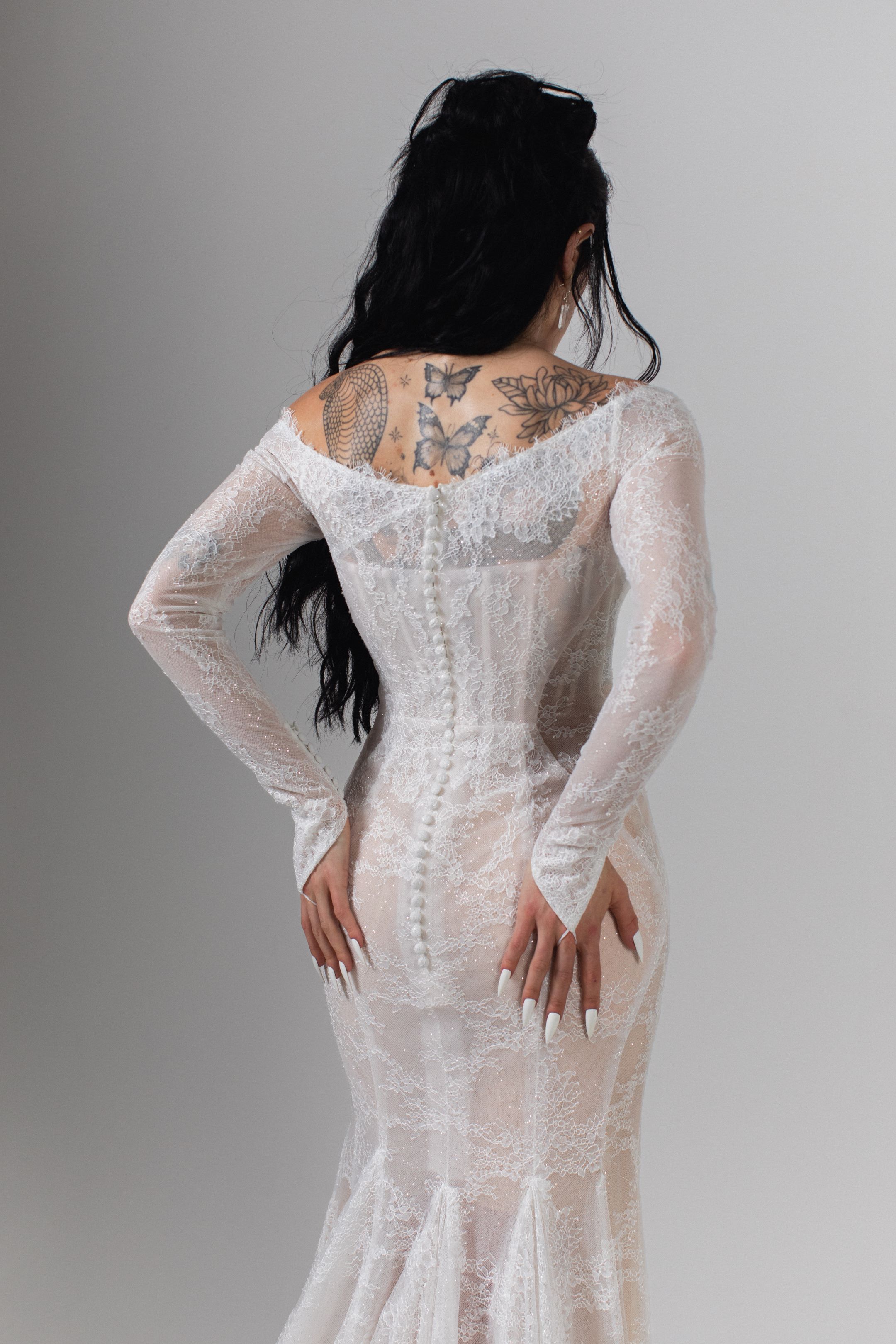
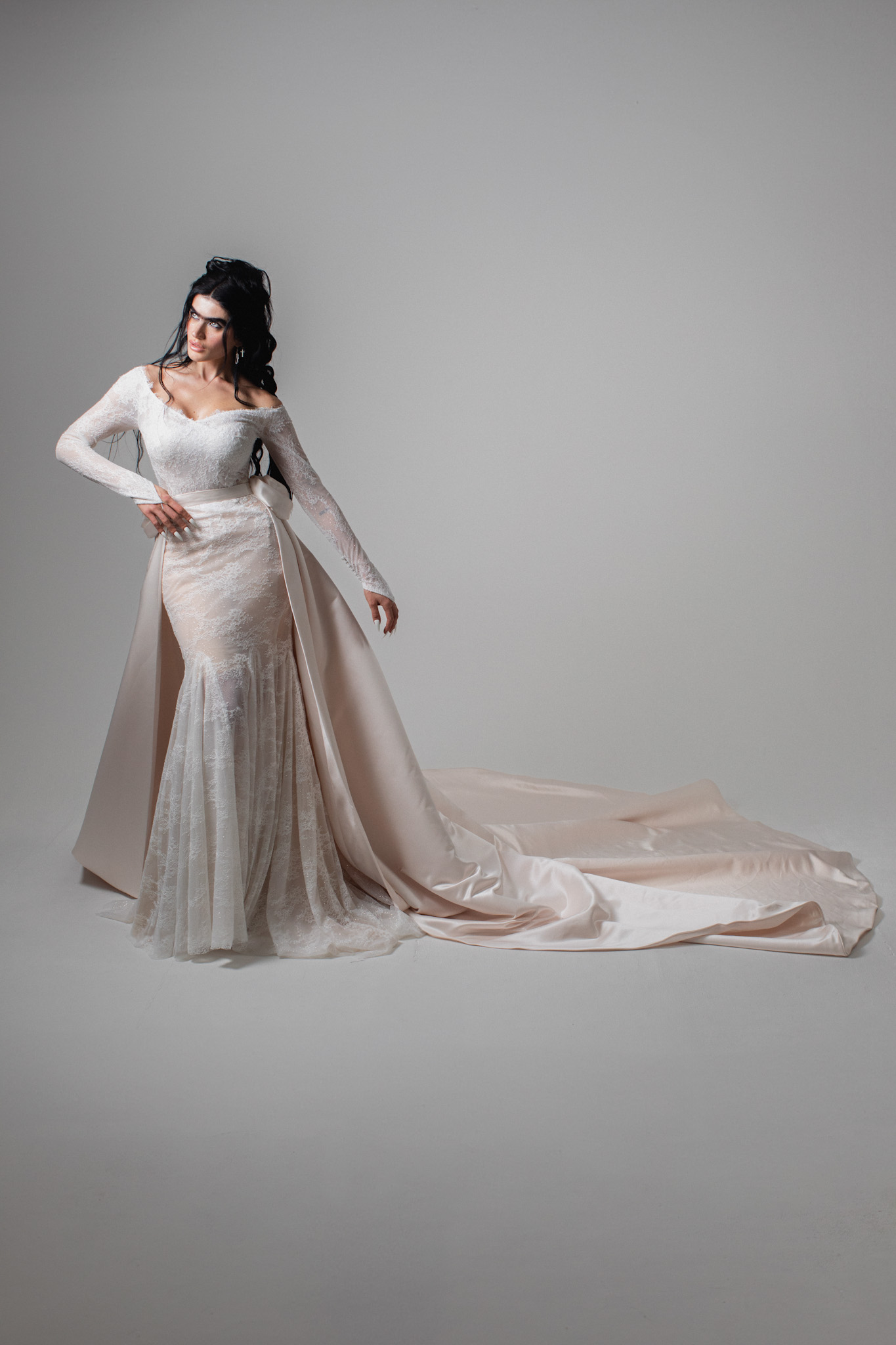
This gown is a ritual in bloom – a living rose forged in lace and satin, calling upon centuries of feminine magic, beauty, and sacred power, sheer floral lace sculpting the body in a fitted silhouette, with godets that flare into a soft mermaid shape. Long sleeves and an asymmetrical neckline cross over the chest like a ritual wrap.
A detachable rose-pink satin overskirt flows from the hips, anchored by two fabric roses, adding softness and contrast to the bold transparency beneath.
Rose is for the woman who blooms with purpose – veiled in beauty, rooted in power.
Lisbeth
She healed with salt, not sorcery.
Lisbeth Nypan was a folk healer and quiet defiance in a fearful world. She never recanted, and for that, she was burned at sixty. This gown is for her.
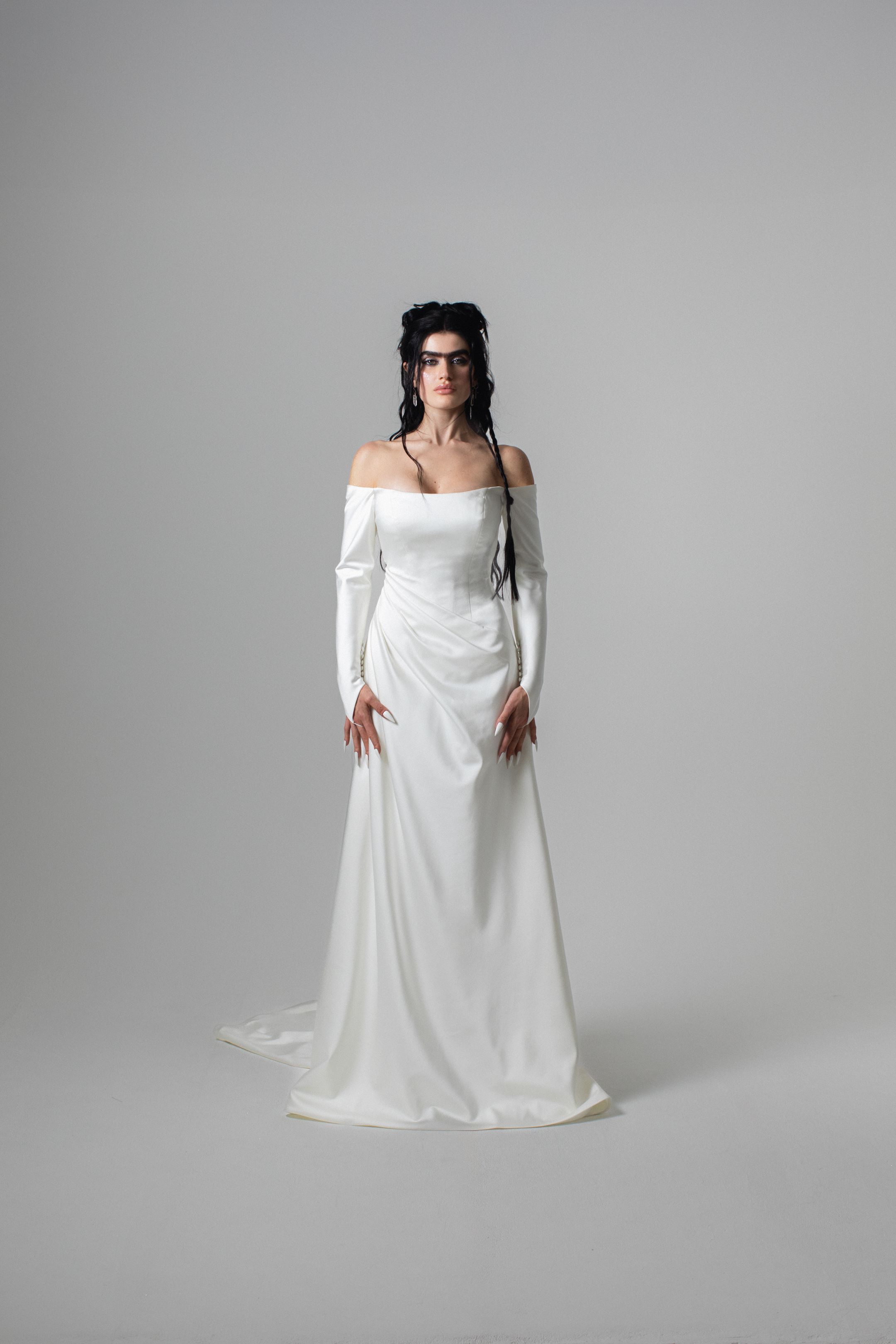
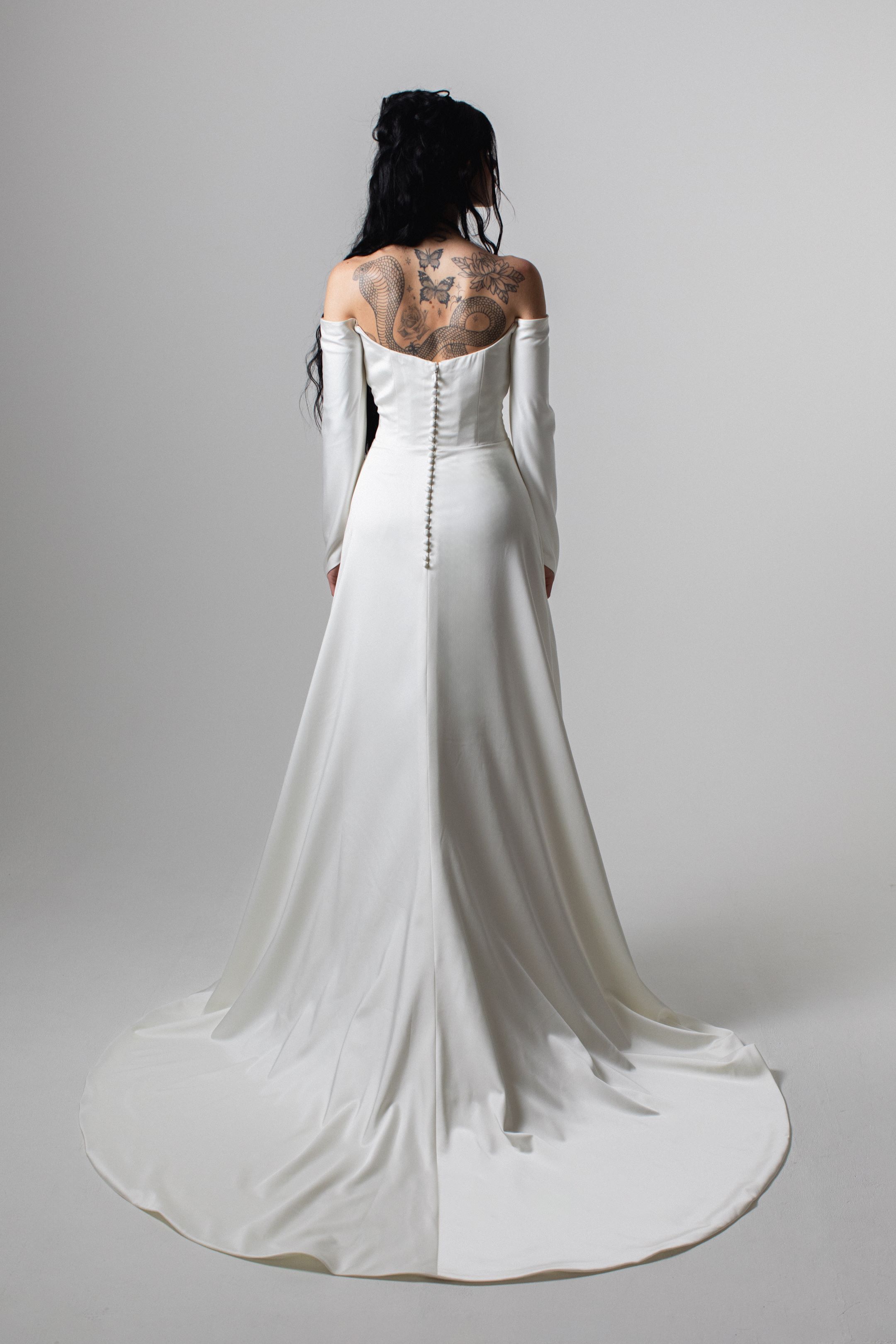
Cut in supple stretch satin, Lisbeth moves like water drawn from a deep well of wisdom – the kind they tried to burn and cast out. The softly A-line silhouette drapes diagonally across the bodice, revealing one half of a drop-waist corset: a tension between concealment and truth.
Long sleeves taper into sharp gauntlet points, looping around the middle finger – a quiet homage to hands that only healed, never harmed.
Lisbeth doesn’t seek attention. She endures. A whisper in salt.


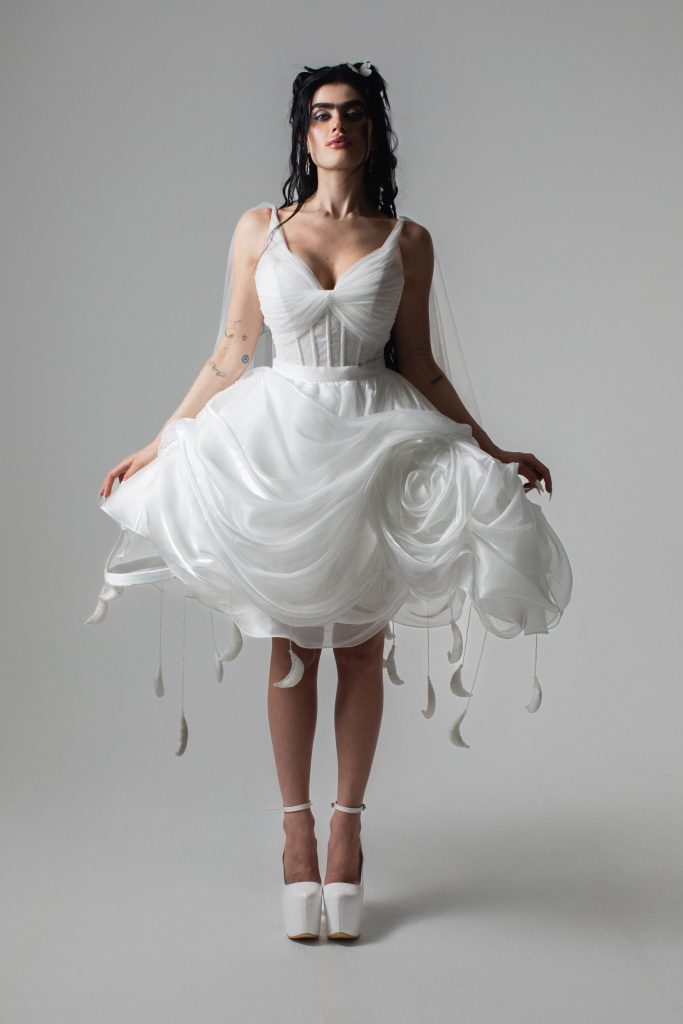
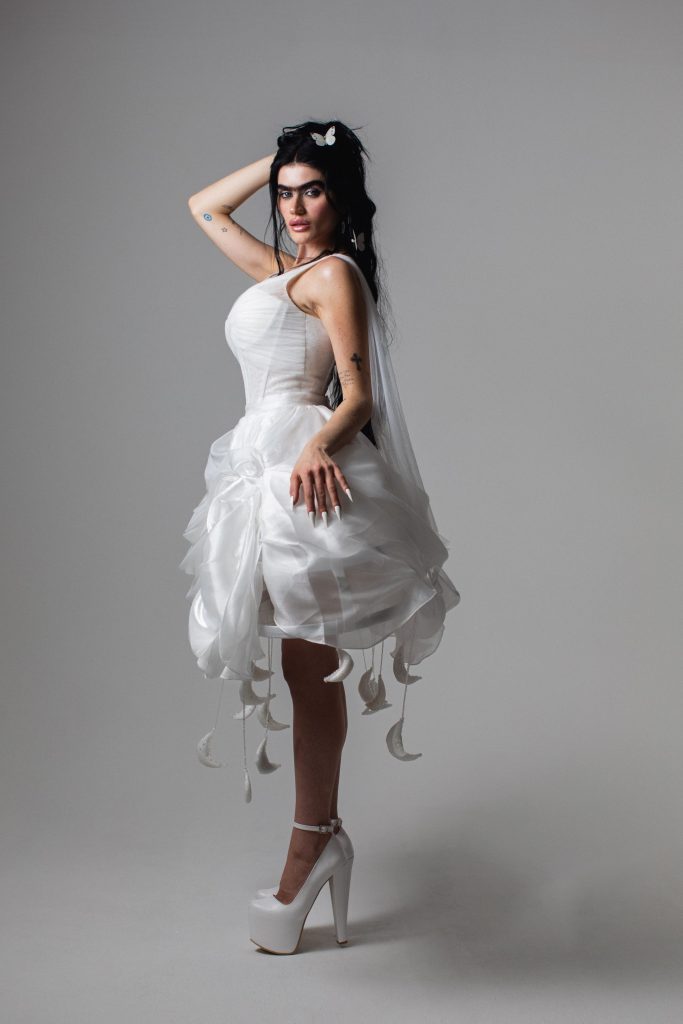
Celeste - The Moon Skirt
Born of reverence for Celeste Larsen, author of The Witch Wound – a work that carved open one of the deepest scars of our collective memory. Her words became a cornerstone of this collection, and this piece was created both in honour of her and for her
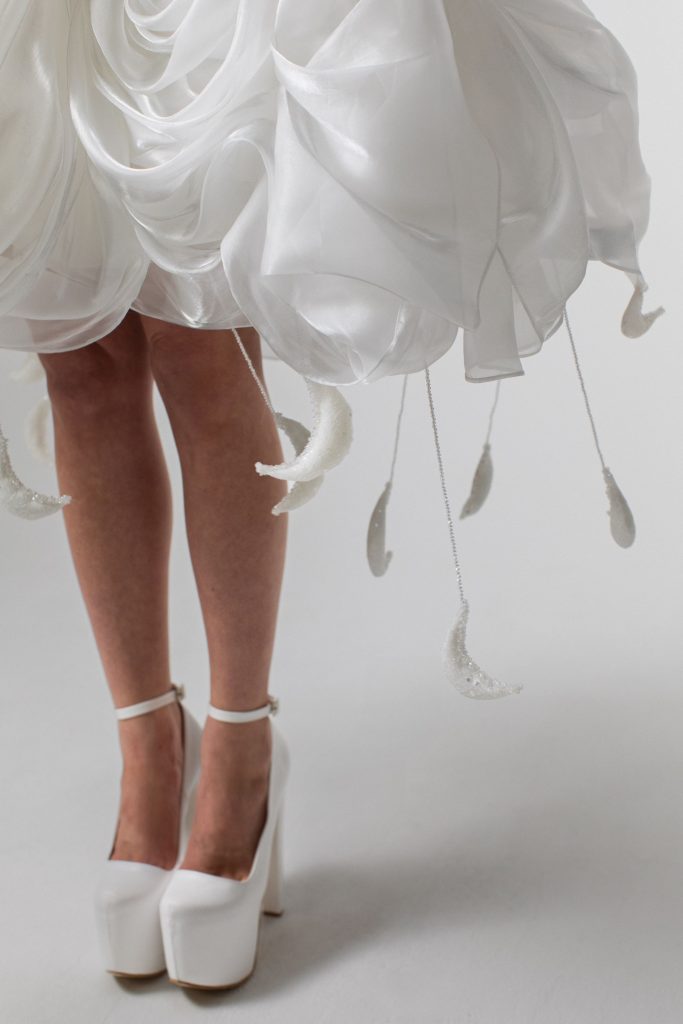
A hand-forged cage of boning forms the skeleton of the skirt, draped in iridescent chiffon that falls in liquid waves, shimmering like a fractured night sky.
On the left, a single rose blooms in secrecy, hidden in the folds. On the right, the raw structure is laid bare, the bones of the garment exposed without apology. Suspended from the cage, handmade moons swing like relics – symbols of cycles, wounds, and the impossible beauty of survival.